Strengthening Gender in Business Engagement and Humanitarian Action in Asia Pacific
Crises are not gender-neutral and gender-responsive approaches are essential to effective humanitarian action. What that means in practice was part of the conversation organized by UN Women and the OCHA–UNDP Connecting Business Initiative (CBI) to mark International Women’s Day 2026.
The discussion took shape as a regional learning webinar on strengthening gender-responsive private sector engagement in humanitarian action across Asia and the Pacific, convened with the support of the Asia Pacific Gender in Humanitarian Action Working Group. Bringing together businesses, humanitarian practitioners, and gender specialists, the session explored practical ways to integrate gender perspectives into business engagement in disaster preparedness, response, and recovery.
Framed around the International Women’s Day theme “Rights. Justice. Action.”, the discussion highlighted the growing role of the private sector in humanitarian response and the importance of ensuring that such engagement is inclusive, accountable, and responsive to the different impacts crises have on women and men.
“Millions of people require humanitarian assistance, and in almost all crisis context women and girls are disproportionately affected,” said Agustin Orengo, Head of Coordination and Preparedness Unit at the Regional Office for Asia and the Pacific, United Nations Office for the Coordination of Humanitarian Affairs (OCHA), as he opened the session. He added that “They face heightened risks of gender-based violence, limited access to services, and increased unpaid care burdens. At the same time, women are leaders in their communities, entrepreneurs, and essential contributors to local economies.”
The webinar was moderated by Sadhana Mohan, Regional Lead for Asia and the Pacific at the OCHA–UNDP Connecting Business Initiative, who guided the conversation toward practical lessons and real-world experiences from across the region.
Integrating gender perspectives into humanitarian engagement
Shahida Parveen, Project Coordinator for Women’s Economic Resilience and Gender in Humanitarian Action coordination at UN Women Pakistan, shared insights from Pakistan’s humanitarian context, including experiences from flood-affected communities. She emphasized that gender-responsive engagement begins with listening to women and ensuring their priorities shape both humanitarian responses and private sector initiatives.
She highlighted the importance of participatory consultations, gender-disaggregated assessments, and partnerships that enable women to access resources and opportunities during crises. In Pakistan, collaboration with private sector partners has also supported initiatives such as financial literacy programmes for women affected by floods.
“Women are not only affected by crises they are also central to recovery and resilience,” Shahida said. “Ensuring their voices are heard in planning and response helps create solutions that are more inclusive and sustainable.”
She also underscored the critical role of local women’s organizations in bridging communities, humanitarian actors, and businesses, helping translate local needs into actionable partnerships.
Private sector contributions in disaster response
From the perspective of a business-led disaster resilience network, Rene “Butch” Meily, President of the Philippine Disaster Resilience Foundation (PDRF), shared how private sector networks in the Philippines contribute to disaster response and recovery.
PDRF has mobilized companies across sectors to support communities affected by disasters, including initiatives that assist women working in sectors such as weaving, fishing, and agriculture. Meily highlighted that while private sector engagement in humanitarian action is expanding, integrating gender perspectives into these efforts remains an area where further progress is needed.
“Women often take on active roles during relief efforts—supporting their families, organizing communities, and helping rebuild livelihoods,” Meily noted. “Recognizing and supporting this role is critical to making humanitarian response more inclusive and effective.”
He noted that strengthening gender-sensitive monitoring and evaluation tools can help businesses better understand the impact of their support and identify opportunities to improve future responses.
Women entrepreneurs as actors in crisis response
Highlighting experiences from the Pacific, Fiona Dansey, Coordinator of the Women Entrepreneurs Business Council under the Fiji Commerce and Employers Federation (F-CEF), spoke about the vital role women entrepreneurs play during crises.
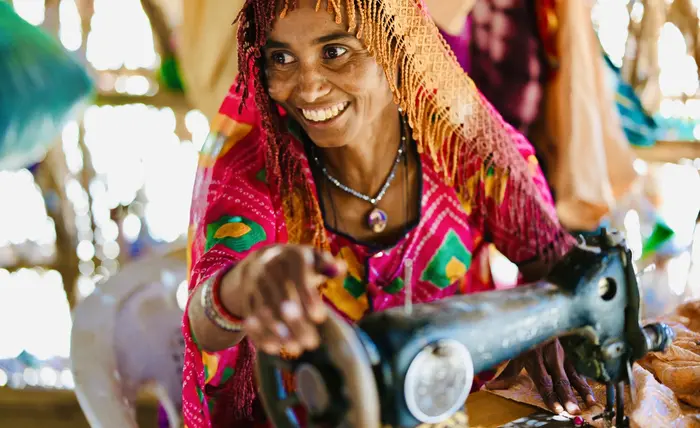
In Fiji, women-led businesses are often both economic drivers and community responders. Dansey explained how initiatives such as business continuity toolkits for micro and small enterprises have helped strengthen preparedness and recovery capacity among women entrepreneurs.
“Women entrepreneurs are not only rebuilding their own businesses after disasters, they are also supporting their communities and local economies,” Fiona explained. “Recognizing and supporting their role in disaster preparedness and recovery is essential.”
She also stressed the importance of strengthening access to finance, improving data collection, and ensuring women-led enterprises are included in national disaster preparedness and recovery frameworks.
Moving from awareness to action
During the interactive segment, participants from across the region raised questions on how women entrepreneurs, particularly home-based workers and small business owners, can be better connected to private sector networks and business ecosystems. The discussion also explored pathways to support women transitioning from informal enterprises to more formal business platforms through mentorship, skills development, and targeted support.
Speakers emphasized the importance of collaboration between governments, businesses, and humanitarian actors to ensure more inclusive and sustainable opportunities for women in crisis-affected contexts.
Throughout the discussion, speakers highlighted the importance of stronger collaboration between humanitarian actors, governments, and the private sector to ensure gender considerations are embedded across disaster preparedness and response efforts.
They also emphasized the need to address broader risks faced by women and girls in crisis contexts including increased vulnerabilities and barriers to accessing resources while strengthening support for women-led microenterprises and home-based workers.
The session concluded with a shared recognition that businesses have an increasingly important role to play in advancing gender-responsive humanitarian action. By integrating gender analysis, strengthening partnerships with women’s organizations, and investing in inclusive recovery efforts, the private sector can help ensure that humanitarian responses are more equitable and effective.
As the region continues to face complex and climate-driven crises, the conversation underscored a clear message: advancing gender equality in humanitarian action requires collaboration, practical solutions, and sustained commitment from all sectors.