A trifecta of perspectives: How swift water rescue training shapes disaster management in Sri Lanka

In Sri Lanka, the 2004 tsunami remains a vivid memory. With coastal communities still highly vulnerable to tsunamis and other climate-related hazards, the Asia Pacific Alliance for Disaster Management Sri Lanka (A-PAD) has been organizing swift water search and rescue training programmes since 2017 to support national tsunami preparedness.
Here, three members of the A-PAD Sri Lanka Search and Rescue Team reflect on their journey and the impact of these training programmes on themselves, their communities, and the country as a whole:
- Michelle Joseph, development professional, A-PAD Sri Lanka Search and Rescue Team Member
- Asanka Ambawatte, Lion Brewery Ceylon leadership and A-PAD Sri Lanka Search and Rescue Team member
- Sasitha Rajapaksha, Lieutenant Commander in the Sri Lanka Navy and A-PAD Sri Lanka Search and Rescue Team member
Michelle Joseph, development professional, A-PAD Sri Lanka Search and Rescue Team Member
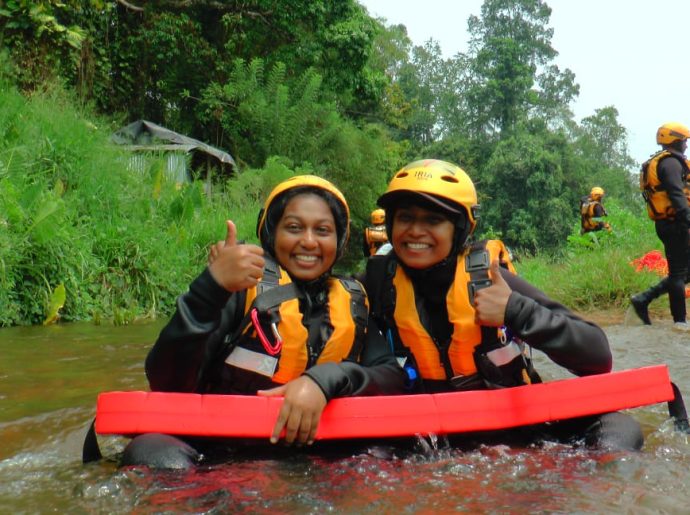
My journey into search and rescue began during my time as an employee at A-PAD. We were an all-female team, and Firzam Hashim, the A-PAD Head of Operations, opened up the opportunity for of us to join the training in 2017. At the time, search and rescue in Sri Lanka was almost exclusively male-dominated due to cultural and social expectations. Seeing a small organization like A-PAD take the lead in breaking that taboo was both surprising and inspiring.
For me, this opportunity was transformational, both professionally and personally. I wasn’t just there to observe—I was on the ground, jumping out of boats, going through simulated rescues and doing the same rigorous physical training as my male counterparts. The Japanese trainers emphasized a “one team” mentality—if we were up to the challenge, we were expected to perform at the same level as everyone else, regardless of our gender. I take real pride in saying I am the first female search and rescue-trained civilian in Sri Lanka.
At first, we tried encouraging the corporate sector to send female participants, but taboos and doubts prevented women from getting involved. However, in 2020, we partnered with World Vision to conduct basic water safety training in Mannar, in Northern Province, where social stigma and gender power dynamics are amplified tenfold.
We were incredibly surprised by the number of women who came and participated. They joined us in the water, unafraid. We often assume that women in these areas don’t want to get involved. It turns out that the issue wasn’t willingness—it was access. Today, from just one or two women, we’ve grown to 20 female trainees. For a small island like ours and a small organization like A-PAD , that’s a big achievement.
This work has transformed not just how I see disaster management but how I see life itself. When A-PAD started, both the Government and the Disaster Management Centre took a largely reactive approach. Shifting from response to preparedness was a major learning curve, but I’ve come to realize that while preparedness is essential, mitigation is the most important piece.
Working in disaster management reshapes how you see the world. My older brother, for example, now keeps four life jackets in his car—one for each of his kids, one for his wife and one for himself. He’s watched me train, seen our search and rescue team in action and witnessed the importance of being ready. It’s a mindset shift.
Last year, thanks to my A-PAD training, I was able to rescue one of my own volunteers during a flood in Matara. I’ve also ensured that my current organization has streamlined emergency protocols in place, so my team always knows what to do in a crisis.
Asanka Ambawatte, Lion Brewery Ceylon leadership and A-PAD Sri Lanka Search and Rescue Team member
In 2016, the southwest monsoon floods severely impacted the production plant of Lion Brewery Ceylon (LBC), near the Kelani River basin. The damage that year was devastating, resulting in $20,000–$23,000 in lost revenue. Despite these challenges, our management team ensured no jobs were lost and supported both our employees and members of the surrounding community who were affected by the floods.
LBC quickly developed a recovery plan, successfully meeting its targets within six months. A year later, we were invited to participate in A-PAD’s first search and rescue training in Koggala to strengthen our life-saving skills and enhance LBC’s disaster resilience.
I’ve always enjoyed sports and wanted to try something new. My motivation was also personal―my family and I were affected by the 2016 floods, and I wanted to be better prepared for future events. During my first training session, I had no idea what rescue training involved, so I was cast as a victim in the simulations. I remember thinking, “I never want to be the person who needs saving. I want to be a rescuer who could help in a crisis.” It changed me.
Over the years, I sometimes had to take personal leave and cover my own travel expenses to attend these training sessions. Today, seven years later, everyone at work has seen the impact of the search and rescue team and how our deployment during floods supports both the company and the community. The company now supports our participation and recognizes the value of what we do.
When floods hit Biyagama, water levels rose overnight. We received a flood warning, and the company instructed us to be ready for deployment. That week, the LBC search and rescue team was out all day, distributing meals and evacuating people. We realized how challenging paddling against the current was and decided we needed a motorboat. This experience helped us prepare better for the next monsoon season and identify the most effective equipment our deployment.
The private sector rarely collaborates with the Government, but the two can work together to minimize the impact of crises. We receive early warning messages from government agencies, which play a crucial role in preparing for disasters.
There’s still a lack of awareness in the private sector about the value of investing in search and rescue. It’s often dismissed because there are no immediate financial returns. Many investors focus on maximizing profits and fail to see the long-term advantages of disaster risk reduction.
Today, I gather information from trusted sources, including A-PAD, and share what I learn. As a result, we’re better prepared for crises. The biggest change has been in our perceptions of search and rescue, and I’m proud of how far we’ve come. This has been one of the most important trainings I’ve done—both for work and life.
Sasitha Rajapaksha, Lieutenant Commander in the Sri Lanka Navy and A-PAD Sri Lanka Search and Rescue Team member
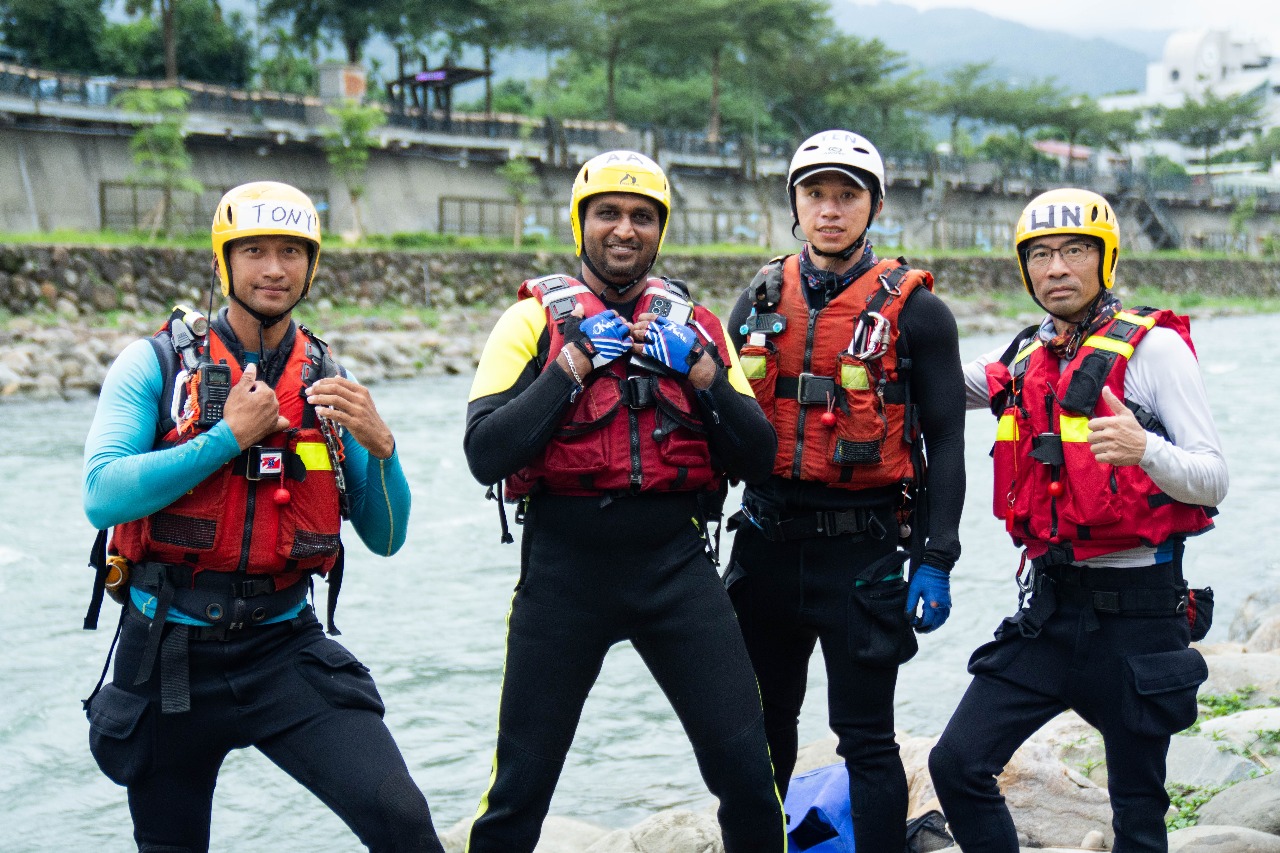
My motivation for joining search and rescue training stems from my commitment to saving lives and strengthening disaster response capabilities within the Sri Lanka Navy. As part of the Rapid Action Boat Squadron, I’ve witnessed the devastating impact of floods, landslides and other natural disasters on communities. The chance to train with A-PAD and attend advanced training in Taiwan was invaluable. It helped me gain techniques and strategies that I now use in real-life rescue missions.
A-PAD’s search and rescue training underscored that successful rescues are not just about individual skills but about teamwork, precise coordination and quick decision-making under pressure. Taking part influenced how I talk about disaster preparedness with my family and colleagues. Early warning systems, proper training and proactive safety measures make all the difference.
The training gave me a stronger sense of responsibility and the confidence to handle complex rescue scenarios. It pushed my physical and mental limits, improving my adaptability and leadership in crisis situations. In a rescue, every second counts. The better prepared you are, the more lives you can save. This motivates me to continue refining my skills and strengthening Sri Lanka’s disaster response capabilities.
I’ve seen how collaboration between the military, A-PAD and the private sector has strengthened search and rescue operations by creating a multisectoral response system. This partnership has ensured access to specialized equipment, diverse expertise and logistical support, making rescue missions more efficient.
A-PAD’s training provided technical expertise and international best practices, while the military brought discipline, rapid deployment capabilities and operational leadership.
During the October 2024 floods, the involvement of the tri-forces accelerated the evacuation of affected communities and the delivery of essential supplies. Coordination between the military, local authorities and A-PAD ensured swift, effective action, minimizing damage and saving lives.
This kind of collaboration allows us to pool resources, strengthen logistical support and adopt a unified approach to disaster response, making operations more efficient and impactful. Moving forward, I see these partnerships evolving into joint training programmes, knowledge-sharing initiatives and coordinated regional frameworks to enhance disaster resilience across South Asia.