Last updated: 22 October 2025
In October 2025, Mexico faced some of its most intense and erratic rainfall in recent years, triggering widespread flooding across central and Gulf states. The deluge was caused by a convergence of late-season tropical systems — including Tropical Storms Priscilla and Raymond, a tropical disturbance in the Gulf (90-E), and a cold front descending from Texas. Together, these systems result in what the National Government has named as a “perfect storm”, as they poured extraordinary volumes of rain, not seen in more than eight decades, over river basins already swollen at the end of the rainy season. The combination of saturated soils, overflowing rivers, and steep terrain led to flash floods and landslides that swept through urban and rural communities alike.
As of 20 October 2025, federal authorities report that five central and Gulf states impacted — Veracruz, Hidalgo, Puebla, Querétaro, and San Luis Potosí — remain among the most severely affected by the floods, exposed to significant humanitarian and recovery needs. Across these regions, 139 municipalities have officially recorded damage, with 76 fatalities and 39 people still missing. Immediate priorities identified by preliminary assessments reported by the federal and state authorities include temporary shelter, food assistance, health services, and restoration of basic utilities for tens of thousands of displaced families. With nearly 100,000 households affected, access to clean water, sanitation, and electricity remains inconsistent in several municipalities. Infrastructure damage—particularly to roads, bridges, and rural access routes—has hampered relief delivery in isolated communities. Continued support is required to stabilise affected communities, restore livelihoods, and rebuild local economies. Coordinated engagement from donors and private partners will be critical to sustain recovery efforts and ensure that the most vulnerable households receive timely and equitable assistance.
Mobilizing the Private Sector to Support Humanitarian Response
The National Centre for Epidemiological Contingencies and Disasters (CENACED), the Connecting Business Initiative (CBI) Member Network in Mexico, is leading a coordinated, multi-sectoral response to support communities most affected by the devastating floods in Eastern Mexico from 7–11 October 2025.
CENACED brings together public and private sector actors, academia, and civil society to deliver targeted humanitarian assistance. In close coordination with +200 allies, the Federal Government—through different entities such as CNPC (Coordinación Nacional de Protección Civil- National Coordination for Civil Protection), SEGOB (Secretaría de Gobernación- Ministry of the Interior), SE (Secretaría de Economía- Ministry of Economy), SEDENA (Secretaría de la Defensa Nacional- Ministry of National Defense), SEMAR (Secretaría de Marina- Ministry of the Navy) —and with support from the United Nations System in Mexico and 14 NGOs on the ground, the network ensures a unified and effective response.
Weekly virtual coordination meetings facilitate real-time information exchange between field organisations, enabling swift identification of community needs and alignment of private sector contributions.
To date, CENACED has delivered over 123 tonnes of food, 70,000 litres of water, 73,000 litres of milk, and 13,000 humanitarian aid kits across five impacted states, with a focus on Veracruz and Puebla. Additionally, 13 community kitchens are serving 49,000 hot meals daily, thanks to the mobilisation of local partners.
Beyond food assistance, the network has deployed medical and humanitarian brigades, heavy machinery, and equipment to reopen six key access routes. Donations include water tanks, purification systems, filters, and essential household items. Furthermore, electronic vouchers and direct cash transfers totalling approximately 200,000 pesos (USD 11,000) have been distributed to affected families.
Thanks to its strategic partnership with the Consejo Coordinador Empresarial (CCE), CENACED has been designated as the official channel to report private sector efforts directly to President Claudia Sheinbaum. The importance of these efforts has also been recognised internationally—OCHA ROLAC has featured the CBI response in its latest Flash Update (No. 2).
To ensure efficient coordination, CENACED has established nine committees with designated leaders:
- Fundraising and Accountability
- Relationship with Government, Security, and Monitoring
- Communication
- Supply and Logistics
- Volunteering
- Livelihood Recovery
- Infrastructure and Reconstruction Evaluation
- Health and Hygiene
- Education
Through its intersectoral coordination platform, Unidos por Ellxs, CENACED is coordinating the support of over +200 organizations and businesses in Mexico, in a 3-stage strategy:
- 1st stage (3 days) – First response: focusing on restoring communications, mapping alternative access routes, deploying response teams and volunteers, and convening the private sector and civil society.
- 2nd stage (1-4 weeks) – Humanitarian assistance: channeling the efforts of the private sector movilizing humanitarian aid, coordinating collection centres, developing fundraising campaigns and mechanisms
- 3rd stage (> 4 weeks) – Livelihood recovery and reconstruction: the donations will be focus on recovering MSMEs, critical infrastructure, and education centres, among others.
Take action: How the private sector – and individuals – can help
- Make a financial contribution: Corporate and individual donors are invited to contribute cash directly to CBI Member Network in Mexico, CENACED. The financial contribution can be processes through the webpage of CENACED: Donativos – CENACED
- Make an in-kind contribution of goods or services: CENACED and some of its allies have established various collection centres that receive in-kind donations. Find more information about collection centres here: Convocatoria para activación de UXE por el huracán OTIS – CENACED
- Volunteer to support: Through the page Voluntariado – Unidos por Ellos there are options to support as a volunteer in collection center or others.
- Disseminate the work of CENACED: Follow the network on social media to engage with an amplify its content (you can find them on Instagram, Facebook, X, and LinkedIn)
This is a powerful example of what can be achieved when sectors unite with purpose. We invite more partners to join us in strengthening resilience and delivering hope where it’s needed most.
CBI provides advice and support to regional and multinational companies on how best to provide assistance in coordination with the UN and national and regional disaster management authorities. For more information, please write to Ms. Elisa Trujillo, CBI Regional Lead for Latin America and the Caribbean at elisa.trujilloleyva@un.org.
Mexican businesses affected by floodings or wishing to support humanitarian relief operations are strongly encouraged to work with and through CENACED. For more information, contact connectingbusiness@un.org and we can connect you.
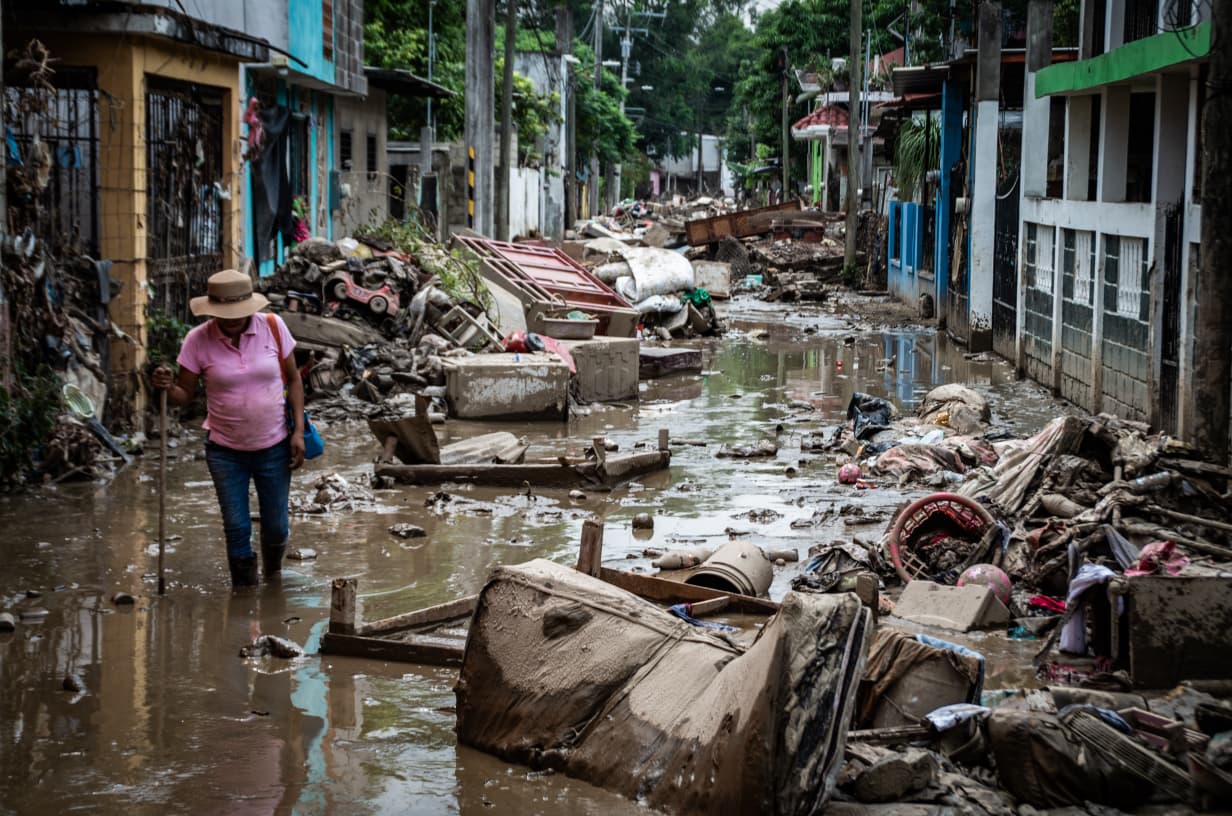
Featured image: Mexico is suffering from severe flooding. Here, an image from Álamo, Veracruz. Photo: Enrique Polito/Medical Impact