


Since mid‑January 2026, southern Chile has been facing a fast‑moving wildfire emergency that has reshaped entire communities. Extreme heat, prolonged drought, and strong winds fueled fires across the Ñuble and Biobío regions, pushing flames into cities and peri‑urban areas. Penco and Lirquén, in Biobío, were among the hardest hit.
The scale of the devastation led the Government of Chile to declare a State of Catastrophe, activating emergency powers and national coordination mechanisms.
According to official data from SENAPRED and CONAF (as of 3 February 2026):
- 21 people have lost their lives
- More than 21.803 people have been affected
- At least 4.137 homes have been destroyed or severely damaged
- 66.138 hectares have burned across Ñuble, Biobío, and La Araucanía
Firefighters, emergency responders, and public authorities continue working around the clock. At the same time, attention is already shifting toward early recovery, reconstruction, and long‑term resilience – because for thousands of families, the crisis will not end when the last fire is controlled.

WHEN THE PRIVATE SECTOR STEPS IN
From the first days of the emergency, Chile’s private sector mobilized quickly through Desafío Levantemos Chile (a CBI Member Network), reinforcing public response with financial relief, logistics, and coordinated social action.
Financial relief and economic continuity
The banking sector moved early to ease the financial impact on affected families and small businesses. Banco de Chile, alongside other institutions, activated dedicated donation channels in partnership with Desafío Levantemos Chile, enabling transparent and rapid mobilization of private contributions for emergency response and early recovery.
In parallel, BancoEstado launched a nationwide emergency support package, including the postponement of up to six mortgage and credit payments, deployment of mobile banking units in affected municipalities, and special assistance for families who lost documentation or livelihoods. Other banks—including BCI, Santander, and Scotiabank—implemented similar relief measures to support individuals and small- and medium enterprises (SMEs) in impacted areas.
Logistics, supplies and rapid delivery

Companies across multiple sectors also provided critical in‑kind support. Through established public‑private coordination mechanisms:
- Compañía Cervecerías Unidas (CCU) and Soprole supplied water, milk, and essential food items, supporting the preparation of emergency kits.
- SKY Airline activated air bridges, while logistics companies PDQ and Hualpén ensured ground transportation—key to reaching heavily affected zones such as Penco and Lirquén under difficult access conditions.
Coordinated private sector reposnse: The CBI role in Chile
A central coordination role has been played by Desafío Levantemos Chile, which serves as the CBI (Connecting Business Initiative) Member Network representative in the country. As a private‑sector‑led organization with extensive experience in disaster response, Desafío Levantemos Chile has worked alongside local authorities and community leaders to carry out damage assessments, debris‑removal operations, and the delivery of essential kits, leveraging corporate partnerships, logistics capacity, and private‑sector expertise to scale impact efficiently.
Beyond immediate relief, Desafío Levantemos Chile—supported by its network of companies and allies—has begun enabling the transition toward early recovery and reconstruction, particularly in housing, community infrastructure, and livelihoods restoration. This reflects a broader understanding across the private sector that recovery will be decisive in shaping long‑term resilience for affected communities.
Together, these efforts underscore the strategic importance of the private sector as both an operational and financial partner in crisis response—bridging emergency relief with recovery and laying the groundwork for a stronger, more resilient southern Chile.
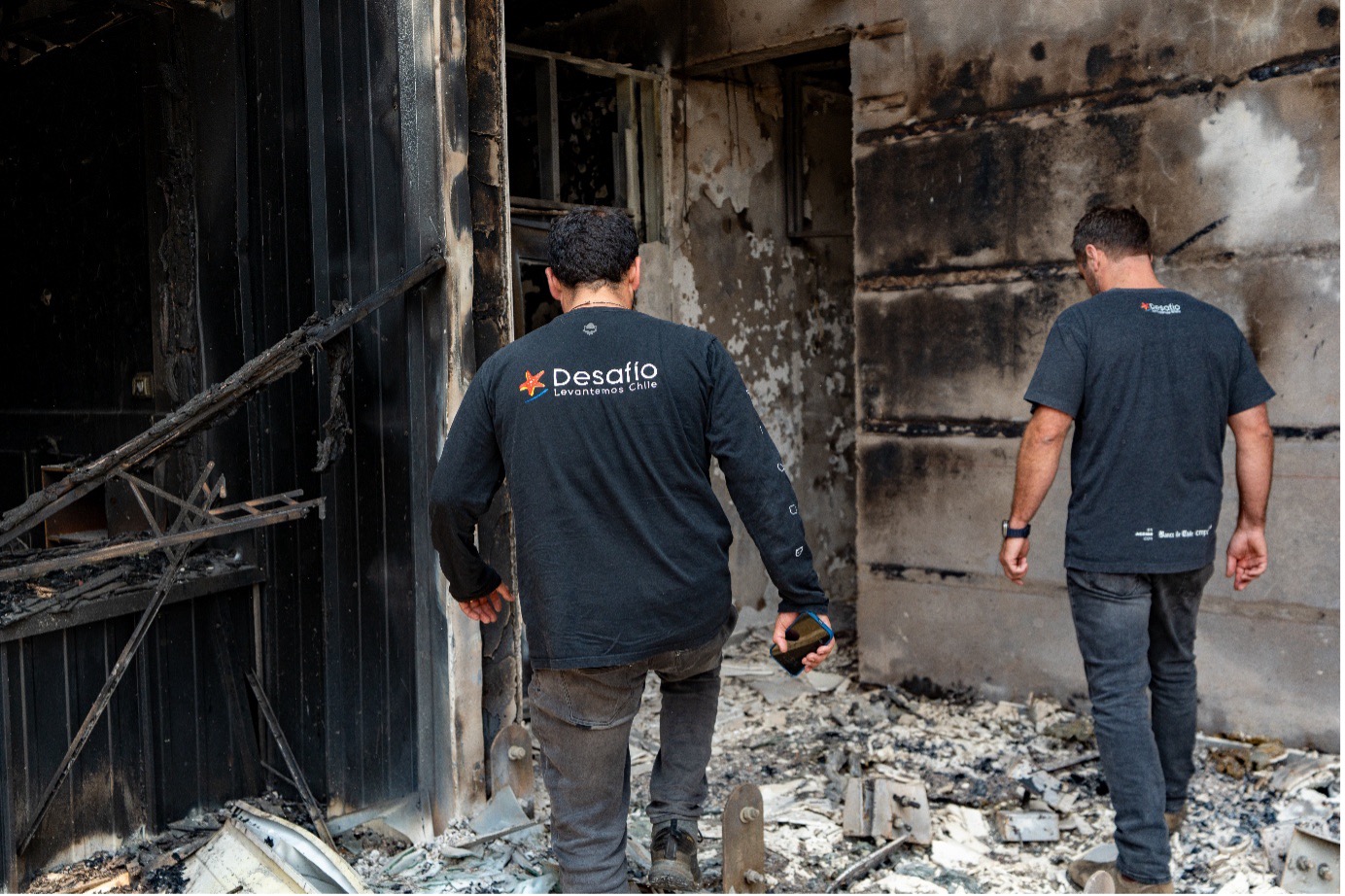
CALL TO ACTION: BECOME PART OF THE SOLUTION
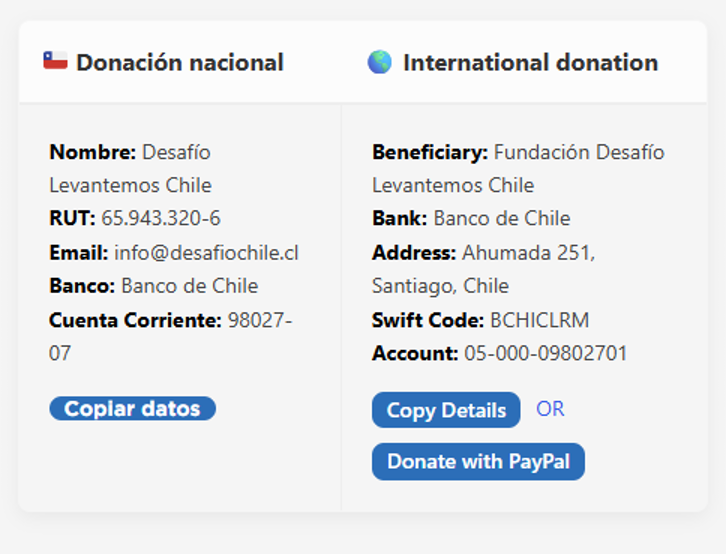
Desafío Levantemos Chile, as CBI’s representative in Chile, has activated a nationwide emergency campaign to support communities devastated by the wildfires in Biobío, Ñuble, and La Araucanía, channeling aid through rapid, coordinated monetary donations through its official webpage or at their official account:
The foundation is prioritizing to deliver:
- Debris‑removal kits,
- Hygiene, cleaning and food supplies,
- Water for brigadistas, and
- Early steps toward reconstruction,
working closely with municipalities, regional authorities, and private‑sector partners. By focusing on requesting financial contributions via its official platform—the organization aims to ensure speed, flexibility, and alignment on the ground, making this the most effective avenue for institutions, companies, and international actors seeking to contribute without duplicating efforts. However, corporate partnerships and advocacy efforts are always welcome.