From Factory to Crisis Frontlines: How Food & Beverage Companies Deliver
In the critical 72 hours after disaster strikes, three things determine survival: water, food and shelter. While governments and humanitarian organizations coordinate and mobilize, there is one industry that is already there – with distribution centers in place, supply chains operational, and the capacity to deliver life-sustaining resources at scale: the food and beverage industry.
The food and beverage (F&B) industry encompasses all businesses involved in producing, processing, distributing, and selling food and drinks for human consumption. This includes everything from farming and food manufacturing to restaurants, grocery stores, and beverage companies.
F&B companies operate the world’s most sophisticated distribution networks, reaching remote villages and urban centers alike. They maintain cold chain logistics, water treatment facilities, and emergency stockpiles. Most critically, they’re embedded in local communities through retail partnerships, distributors, and regional operations – creating an immediate response capacity.
Across CBI Member Networks around the globe, food and beverage companies like PepsiCo, Coca-Cola, Nestle, Arca/La Favorita, P&G and many others are reliable partners and often first responders to disasters, leveraging their supply chains and infrastructure to deliver aid.
When the 2023 earthquakes devastated Turkiye and Syria, this reality became undeniable. Within hours, PepsiCo provided shelter and immediate needs to its employees in the affected areas and mobilized $1.3 million in aid, Coca-Cola dispatched over 140 truckloads of bottled water and beverages, and Procter & Gamble Türkiye sent mobile toilet and baby care kits, mobilized laundry trucks and provided detergents to support the mobile laundry trucks dispatched by Arçelik, a Turkish multinational household appliances manufacturer. All these efforts were only possible because of the organized private sector and the CBI member network TÜRKONFED coordinating the engagement of local companies.
This past June, the PepsiCo Mexico Foundation partnered with CENACED, the CBI Member Network organization in Mexico, to deliver critical humanitarian aid – including food and water –to families in Oaxaca impacted by Hurricane Erick. “At CENACED, we deeply appreciate the trust and collaboration of Mexico’s food and beverage sector, whose vital participation enabled us to bring essential supplies to the hurricane-affected communities along Oaxaca’s coast,” said Cynthia Espinoza, Director General of CENACED.
Turning business operations into emergency lifelines
F&B companies possess three critical assets that can be lifesaving in delivering fast and effective aid: established distribution networks, rapid deployment capabilities, and local market presence. When disaster strikes, these companies can pivot their existing “operational infrastructure” to support the humanitarian response in only a few hours.
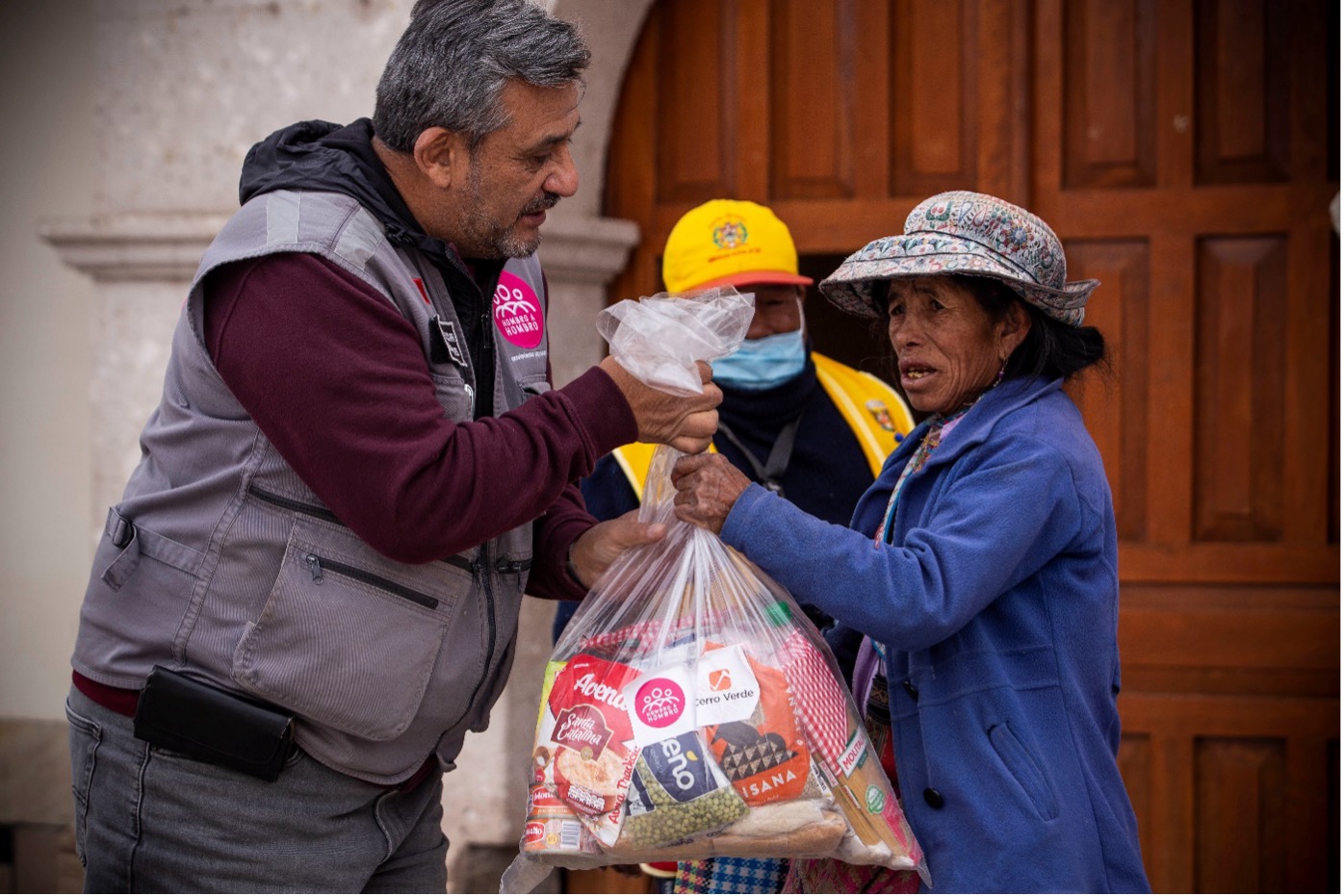
Consider Peru’s business coordination network, Hombro a Hombro, which has been deploying innovative products from companies like P&G, Coca-Cola, and Sodexo to remote communities for years. When flooding threatened Peru’s most vulnerable regions in March 2024, their disaster response demonstrated the true multiplier effect of coordinated business engagement.
P&G’s contribution alone illustrates this impact: 144,480 water purification packets providing 1,444,800 liters of clean water to 2,408 families over two months. But the real power wasn’t in the numbers – it was in the delivery system. These life-saving supplies reached affected communities through Hombro a Hombro’s established coordination network, leveraging close relationships with local authorities and Peru’s National Institute of Civil Defense (INDECI) to ensure aid reached those who needed it most.
F&B Global Coordination Web
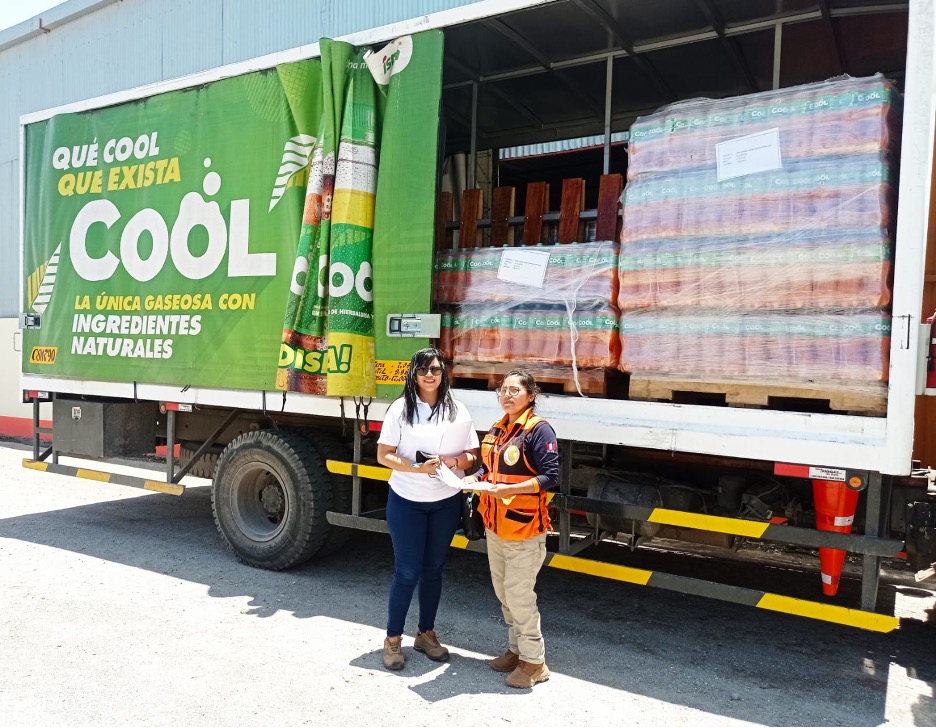
Multinational companies create something remarkable when they engage with CBI Member Networks across multiple countries, a web of disaster response coordination capabilities that spans continents and adapts to local contexts and needs.
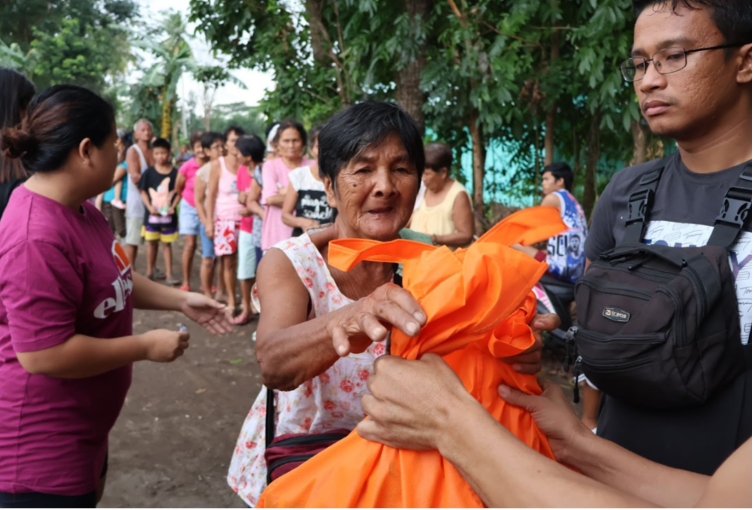
Take Nestlé’s response activities in the Philippines: when yphoon Rai devastated Eastern and Western Visayas, and parts of Mindanao in 2021, Nestlé Philippines distributed USD 380,000 worth of different sub brands and products to affected areas. Their employee volunteer program, Nestlé Cares, mobilized staff to raise relief funds—which the company matched—delivering more than USD 35,000 to the Philippine Red Cross for recovery efforts.
In Chile, during the devastating 2024 wildfires, Coca-Cola Chile, together with its bottling partners delivered more than 50,000 liters of hydration products and 3,000 solidarity lunches through the collection and distribution centers of Desafío Levantemos Chile. The quick allocation of cash and in-kind donations supported immediate aid delivery for volunteers and victims and the supply of essential products to stores in the affected areas.
When companies like Coca-Cola, Nestlé, and P&G work across multiple CBI Member Networks, they create and improve capabilities across multiple response areas, enable knowledge sharing that spreads best practices between networks, and build coordinated disaster response capacity that can mobilize resources from multiple countries when major disasters strike.
Building Tomorrow’s Resilience Today
An efficient disaster response needs one essential step before, preparedness. F&B companies are actively building disaster preparedness. In Ecuador, companies like Nestlé and Arca/La Favorita contribute to preparedness efforts through their engagement with the local CBI Member Network, Cámara de Industrias y Producción (CIP).
The logic is compelling: during emergencies, the availability of essential products depends entirely on the private sector’s capacity to keep production and distribution chains operational. CIP coordinates with the public sector to prioritize supplies, enable logistical corridors, and adapt production shifts to serve demand in affected areas.
“By sharing supply and distribution protocols with authorities and humanitarian organizations, our partner ARCA/La Favorita optimizes inventories, routes, and delivery points to ensure continuous delivery of food and essential products to priority areas while reducing response times,” explains María Hernández, Sustainability and Development Director at Cámara de Industrias y Producción.
This is only a selection of examples of the impact of the F&B industry in disaster management. In the context of the World Humanitarian Day (August 19) we will be showcasing examples from different industry sectors impact to raise awareness about business engagement in humanitarian efforts worldwide.
We Need More Partnerships, Not Charity
Here’s the crucial insight: the most successful disaster management outcomes occur when F&B companies work as true partners with local authorities, not as external donors dropping off supplies and disappearing. These sustainable disaster management ecosystems save lives, reduce response times, and strengthen the resilience of local communities.
With the current state of a world where climate change is intensifying both the frequency and severity of disasters, coordination is a MUST. CBI member networks facilitate necessary partnerships across F&B companies and other industry sectors by creating systematic coordination mechanisms that leverage corporate capabilities across all phases—preparedness, response, and recovery. Thus, the question is not whether the private sector should be involved in disaster management. The question is how quickly we can scale these coordination models to protect more communities worldwide.
CBI member networks maintain relationships with the local private sector and disaster management authorities, developing capacity, and creating systems that strengthen communities’ ability to withstand and recover from future disasters.
