Happy 10-year Anniversary CBI!
On its tenth anniversary, the OCHA-UNDP Connecting Business Initiative (CBI) gathered CBI Member Networks, government, businesses and community of practice experts for a ten-hour journey: the first ever CBI Private Sector Resilience Forum.
If ten years of operations of CBI have taught us anything, it is that resilience is rarely about how big you are. It is about how ready you are when a crisis occurs, and whether you are willing to show up for one another after.
Celebrating 10 Years of CBI: A Decade of Impact
CBI was launched in 2016 at the World Humanitarian Summit in Istanbul, a gathering of more than 9,000 people from 180 countries convened to make humanitarian action faster, fairer and more effective. CBI was created to bring businesses into disaster preparedness, response, and recovery in a coordinated way. A great many of the ideas born that week have since quietly faded. CBI is one of the few that not only survived but kept growing as a community. Today, CBI and its Member Networks shape the way the world now thinks about business engagement in humanitarian action and crisis resilience.
A decade on, the numbers tell part of the story: 23 Member Networks, representing millions of businesses across 71 states and territories, that have responded to nearly 250 crises and reached over 76 million people. To mark the milestone, CBI brought that whole community together for the Private Sector Resilience Forum – a ten-hour, seven-session gathering that drew more than 1100 registered participants and over 40 speakers from Asia and the Pacific to Africa, Latin America and the Caribbean.
But it was never really about the numbers. (It rarely is.)
“No business can survive for very long if its suppliers, its employees, or its customers are in crisis. So supporting disaster risk reduction, humanitarian response and recovery — it’s not just the right thing to do morally, there’s also a very clear business case for doing that.” – Kareem Elbayar, Programme Coordinator, CBI
Marcos Neto, Assistant Administrator and Director of the Bureau of Policy and Programme Support at the United Nations Development Programme (UNDP), opened the forum stating: “We need to start treating the private sector as a genuine partner across the full spectrum of disaster preparedness, response and recovery.”
What genuine partnership looks like was demonstrated by our incredible speakers. We heard insights on lessons learned alongside practical advice related to crisis resilience from business leaders, CBI Member Networks, UN Resident Coordinators and Humanitarian Coordinators, partner UN agencies, and others throughout 10 consecutive hours of curated discussion on resilience in the area of climate change, recovery, supply chain management, mental health, governance, innovation, and hurricane preparedness.
Marking Ten Years of Collective Action and Partnerships in Building Resilient Communities
Session 1 – The New Face of Resilience
The Private Sector Resilience Forum opened with a conversation around new leadership in today’s climate with strong voices from the Pacific, who reminded us that the road less traveled sometimes leads to where we need to go. Business leaders from the Pacific demonstrated that climate resilience goes far beyond operations, all the way to the highest levels of diplomacy and international law.
Just hours earlier, on 20 May, the United Nations General Assembly endorsed the International Court of Justice’s advisory opinion on States’ obligations to act on climate change – a milestone driven, in no small part, by the quiet persistence of Pacific island nations. The small island state of Vanuatu, a CBI Member Network, led the International Court of Justice case on climate obligations. Over the past few years, Vanuatu stepped out on the international stage to lead the fight for climate justice and with roaring success. Thus, this session also served as a reminder of the sometimes behind-the-scenes work enabling resilient communities and the role of the private sector in catalysing change.
“Civil society started it, government carried it, but the private sector showed that they had to stand alongside them as well to say publicly that this matters to us in business.” – Glen Craig, Executive Committee Member, Vanuatu Business Resilience Council
Because of the high risk of climate-related hazards and economic shocks in the region, businesses, especially small and medium sized businesses need to adopt Business Continuity Plans to simply survive. In Fiji, the smallest businesses, many of them women-led, are often the first to respond and last to stop supporting their neighbors and communities.
Fiona Dansey of the Women Entrepreneurs Business Council of the Fiji Commerce & Employers Federation reminded everyone that “[women] are the backbone of the community, yet many of them remain silent because they are informal or underrepresented and therefore not included in decision making processes”.
Vasiti Soko, former Director of the Fiji National Disaster Management Office (NDMO) is a trailblazer in the field making history as the first female Director of Fiji’s NDMO: “Being the first was never something I wore as a badge. If anything, it was quite a weight, because being the first means you carry the responsibility that you must not be the last.”
A great reminder that resilience planning should not be reduced to one-size-fits-all but must be responsive and understand the conditions women are operating under, and that women deserve a seat at the table, too.
Session 2 – Resilient Supply Chains tourism and finance
While every industry faces different risks and problems, building systems that can absorb shocks is a discipline that every business must develop. In the tourism industry, a storm such as cyclone Ditwah can affect bookings but also airports, workers, digital payments, courts, and everything else. The Philippines, Sri Lanka, and Indonesia are countries that deal with frequent sometimes overlapping shocks. However, apart from key considerations in supply chain management such as access, road networks, and communication, one of the many lessons that surfaced was about community trust and relationships.
“By the time we got to those towns and villages a couple of days later, they had already cleared the areas and were getting back to business,” said Firzan “Hush” Hashim of the Asia-Pacific Alliance for Disaster Management, the CBI Member Network in Sri Lanka.
The discussion surfaced many lessons but most interestingly, that resilience is most durable when it is embedded in relationships with local communities and suppliers from the informal sector, ideally long before a crisis strikes.
“Resilience, in our view, is not just about surviving disruption — it is about adapting, coordinating, and recovering while maintaining trust.” – Selly Irfandy, Head of Corporate Security, PT Astra International
Veronica Gabaldon from the Philipppine Disaster Resilience Foundation (PDRF) perfectly summed up what for many in the Philippines is a bleak reality: “Shock-proof doesn’t mean avoiding disruption, but staying operational throughout”.
It’s not possible to avoid the storm or the the cyclone, but businesses can identify their core strengths and what the best ways are to stay operational, both part of becoming more resilient.
Session 3 – Resilient Recovery
The third session touched on what resilient recovery might look like.
What actually happens in the first 72 hours of a disaster? Drawing on the Türkiye earthquakes of 2023, the floodings in Indonesia and Pakistan, and the aftermath of the 2010 Haiti earthquake, this session showed how businesses can move beyond reactive relief to become strategic actors who plan for resilient recovery that lasts long after emergency workers have left.
While the speed at which recovery moves depends much on the decisions taken and investments made before the crisis, this panel argued that it is not the most important measure of success. The speakers in this panel were of the mind that the quality of decisions made under pressure was what was decisive for long term recovery.
TÜRKONFED, a CBI Member Network, was able to operationalize a system within 48 hours of the 2023 Türkiye earthquakes to match in-kind donations to affected communities, ultimately tracking US$11 million in goods and services within two weeks. A large volume of local resources were mobilized, for which itw as crucial to connect to the speed, scale, and technical expertise of the private sector. Amidst all that, critical elements for greater impact were access to local knowledge, local networks, and the confidence that comes from having worked together before the crisis began.
Arda Batu, Secretary-General of TÜRKONFED remembers: “It’s always about local for local. Without the prior communication with CBI, with local network members, with local nonprofits, we would never be able to identify how and what we would be able to support from the business reservoir.”
Miyamoto’s work in Indonesia showed the positive impact of good relationships fostered by CBI Member Networks. A structured private sector preparedness programme seeded through KADIN eventually enabled the Indonesian Chamber of Commerce to send responder resources to Türkiye in 2023.
Session 4 – Mental Health in Crises
Not every lesson was about the physical emergency response. One of the most moving conversations of the day was also the quietest, a fireside chat on mental health and psychosocial support, arguably one of the most overlooked dimensions of crisis response.
While physical needs command immediate attention, psychological suffering is often less visible. Yet the speakers in this session made clear that how we cope with emergencies that affect our personal lives often determines how we move on from them. There can be no resilient recovery without a mental health component.
In conversation with CBI Network Coordinator Annik Tiedt, Manon Parmentier of the Z Zurich Foundation and Isabel Ortúzar of Desafío Levantemos Chile (a CBI Member Network) drew on experiences from the 2023 Türkiye earthquakes, the 2024 and 2026 Chilean wildfires, and the COVID-19 pandemic to explore what it actually takes to bring mental health into crisis response and recovery.
Speakers agreed that communities affected by disaster already hold the answers to what they need. The role of responding organizations is to listen, adapt, and make themselves available. Desafio Levantemos Chile has adopted a careful step-by-step approach following the devastating wildfires in southern Biobío and Ñuble regions. In the first week, the emergency response team focused on understanding the situation and assessing people’s immediate needs. Two months later, and once people were physically safe and the team had a clearer understanding of the impact of the fires, they introduced a more structured mental health support programme.
“We don’t have the answers. The answers are in the field, in the community. So just listen,” said Isabel Ortúzar of Desafío Levantemos Chile. Sometimes, she explained, helping looks like returning a child the bicycle he lost, signaling that someone is there for him.
Most importantly, the team did not approach people as clinical experts first, but as human beings. They spent time sitting with community members, listening to their experiences, and offering practical help and support.
A second takeaway from fireside chat was that supporting the mental health of frontline responders is as critical as supporting affected communities; and that lasting change requires mental health to be embedded structurally into organizational response systems.
“It’s a bit like on a plane when you have to put your oxygen mask on before helping someone else. If you help first responders be better equipped to address mental health needs, you also help them to protect their own mental health. Because they are on the front line, seeing things that none of us will ever see,” explained Manon Parmentier, Head of Crisis Response, Advocacy & Communications,Z Zurich Foundation
Session 5 – Smart Governance
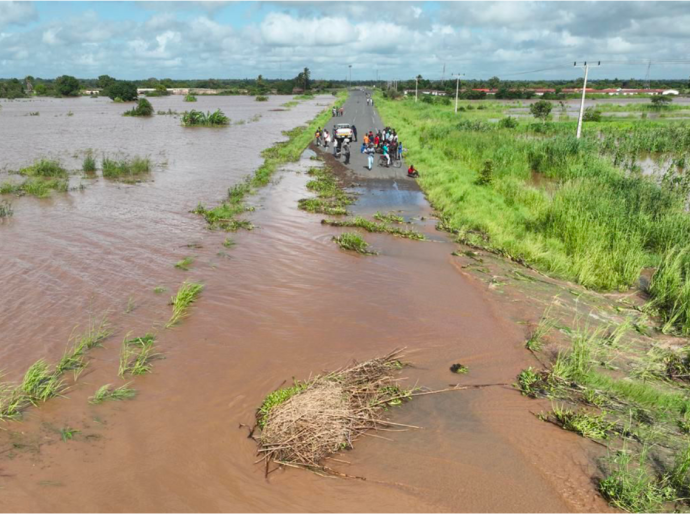
The fifth session of the day asked hard questions to examine what effective public-private governance to work towards crisis resilience looks like. The opening remarks of UN Resident and Humanitarian Coordinator for Mozambique, Dr. Catherine Sozi, drew on the country’s recent flood response where she witnessed the private sector moving with speed and at scale, mobilizing over $6.2 million and deploying expert teams on the ground.
“For the United Nations to remain relevant in the decade ahead and beyond, we must work together with the private sector. It is clear we cannot do this alone.” – Dr. Catherine Sozi, UN RC/HC Mozambique
In this session too, one of the central arguments was that the quality of a disaster response is determined almost entirely by what was designed and agreed upon before the crisis.In Burundi, GSMA’s mobile money pilots succeeded because they built on existing infrastructure and agent networks that communities already used and trusted – rather than attempting to construct new systems mid-crisis.
The most sustainable humanitarian solutions are the ones that strengthen local ecosystems rather than creating parallel systems.” – Carol Gitobu, Senior Market Engagement Manager, GSMA
“Government brings legitimacy and scale,” said Abdullahi Nur Osman, Chief Executive Officer of the Hormuud Salaam Foundation. “The private sector brings speed and market knowledge. Together, you can do things neither can do alone.”
For governments, UN agencies, and business networks, the message is clear and urgent: without a coordination plan agreed to in advance, communities remain vulnerable. When the next crisis occurs, the delay in working together will come at a real human cost.
Session 6 – Innovation
The day’s penultimate session stretched from the Peruvian Amazon to the Philippine archipelago, asking what innovation actually looks like when it is designed around the people who need it most.
Juan Manuel Arribas of Hombro a Hombro, a CBI Member Network, offered an answer from their experience in applying AI to disaster preparedness in Peru. The team found a way to input official hazard data into an AI model and convert it into 24 region-specific radio scripts, social media posts, and television programmes that are distributed free to almost 300 media outlets and reaching over 2 million people daily. With that, Hombro a Hombro has found a way to turn data into actionable daily guidance for communities across the country.
Similarly, PDRF runs one of the world’s first private sector-led Emergency Operations Centers, utilizing innovative technology to bridge early warnings and community action. Butch Meiley, the President of PDRF, shared that “In a community on the outskirts of Manila where 90% of the area floods 90% of the time, a collaboration with a local startup brought in sensors and early warning devices that have transformed how residents prepare. They may be flooded a lot of the time,” he noted, “but at least they have the warnings to prepare for what is coming.”
For data to be powerful in informing decision making, it needs to be made openly available. The way speakers from Copernicus, PDRF, and HDX framed it, that’s what allows innovations to function at scale. In the end, alliances are key, with trusted partners to consider how innovative approaches can be applied in different contexts.”
“Too much disaster technology is designed in the global north and passed on to local communities, often without being co-created with them. In a moment when the humanitarian space is facing contraction, locally led action is not a nice-to-have — it is the only model that scales.” – Erica Moret, Microsoft
“There is no copy-paste in this work, because every reality is absolutely different. But what CBI gives us is the chance to learn from each other — and to know we are not starting from zero.” — Juan Manuel Arribas, Hombro a Hombro
Session 7 – Hurricane Preparedness
Hurricane Melissa, a Category 5 storm, wiped out the equivalent of 41% of Jamaica’s GDP and affected more than five million people across the region. Afterwards, only 8% of the country’s 650 ATMs were working, and an entire economy reverted to cash overnight.
“Resilience cannot be built in the middle of a crisis,” said Larry Watson of the Jamaica Chamber of Commerce. “Preparedness is not a compliance exercise. It is survival.”
For Martin Cave of the Network of Caribbean Chambers of Commerce and Industry, where hurricane season arrives long before the calendar admits it, the conclusion was almost philosophical: “Preparedness for us is a state of mind.”
Looking ahead and why we need each other more than ever
Why does any of this matter now, more than at any point in CBI’s first decade? Because the need has never been greater, and the resources never tighter. More than 252 million people require urgent humanitarian assistance. That is double the figure of 2016 and we see more and more governments cutting their humanitarian budgets.
Lisa Doughten of the United Nations Office for the Coordination of Humanitarian Affairs (OCHA) reminded participants that the private sector needs to be treated as a full partner with a seat at the table to co-create humanitarian solutions.
As Sahba Sobhani of UNDP’s Istanbul International Center for Private Sector in Development described it, CBI is the “connecting tissue”, meaning that businesses, agencies and governments “do not just exchange business cards in the middle of an emergency” because they already know how to work together in a crisis. The next decade, he suggested, is about a network effect across networks worldwide, and about unlocking the kind of innovative finance that lets us act ahead of disaster.
From the CBI side we are grateful to this small but mighty community of Disaster Risk Management Experts and pracitioners from the private sector. We treasure your engagement and the sharp questions you bring to the table. Keep it up, as we want to continue growing as a community, challenging the system so we can build a long-term resilience ecosystem, collectively.
Because none of this happens on its own. It happens because of crisis resilience champions, people willing to build trust, translate between industries and sectors, and pair a long-term vision with the small, practical wins that get things moving. That is what the last ten years have been made of.
And today, we are far readier than we were, and we know exactly what readiness is built from: people who refuse to accept the status quo and want to build a safer, more resilience future, together.
Thank you for being one of those people, and for being a part of the CBI community!
The OCHA-UNDP Connecting Business Initiative (CBI) engages businesses before, during and after emergencies. If you’re a business or a network wondering where to begin — reach out! That’s what we’re here for.