
In recent weeks, the Philippines has been struck by a series of tropical cyclones that have brought widespread impacts across the archipelago. Severe Tropical Storm Trami initiated flooding and deadly landslides, which was followed closely by Typhoon Kong-Rey and Typhoon Yinxing. Shortly after, Typhoon Toraji made landfall, leaving significant impacts across affected areas before dissipating. Now, as recovery efforts are underway in affected areas, the country is preparing for the arrival of Usagi and Tropical Storm Man-yi, which are expected to bring further heavy rainfall and potential flooding.
(Note that local names are assigned for each of these weather systems, hence the different references on the visuals below. The equivalents are Tropical Cyclone Trami/Kristine, Kong-Rey/Leon, Toraji/Nika, Usagi/Ofel, Man-yi/Pepito; and Typhoon Yinxing/Marce.)
Nearly 9 million people have been affected across 17 of the country’s 18 regions. At the peak of displacement, over 700,000 individuals were reported to have left their homes for temporary refuge in evacuation centres, informal settlements, or to be hosted by relatives and friends. The number of casualties has risen with 160 reported deaths, 135 injured and 21 missing.
As such, the Philippine Disaster Resilience Foundation (PDRF) Emergency Operations Center (EOC) is on yellow alert status as of 13 November at noon local time.
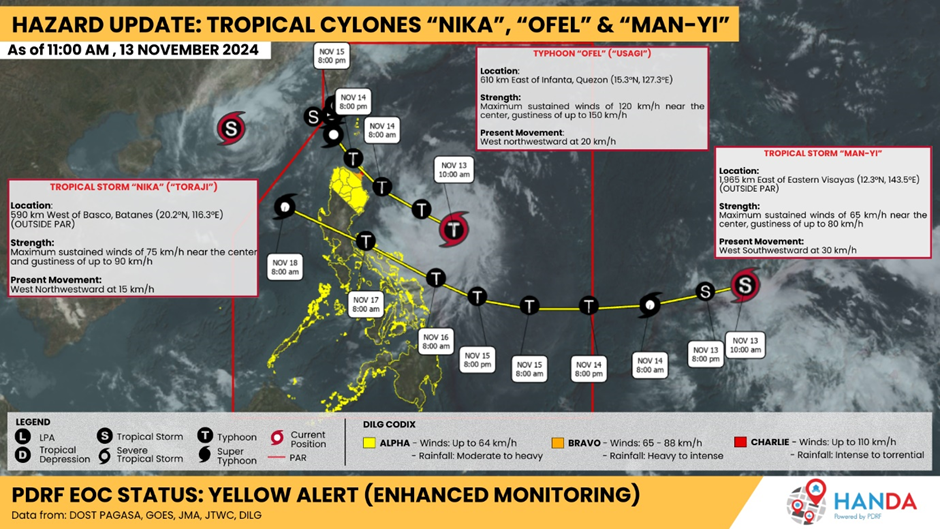
Weeks of consecutive tropical cyclones, with more expected
Trami was preceded by heavy rains on 22 October leading to widespread flooding and landslides. Then, when the storm made landfall in Isabela Province in northern Luzon on 24 October, it continued to cause extensive flooding and flash floods, including a massive landslide in Talisay, Batangas, which tragically buried several homes. Trami exited the Philippines on October 25, making landfall in Viet Nam two days later.
As recovery efforts from Trami continued, Tropical Cyclone Kong-Rey intensified over the Philippine Sea and strengthened to Super Typhoon status. Its path came close to the Batanes Group of Islands in Luzon on 30 October.
A week later, Typhoon Yinxing made landfall in extreme northern Luzon. The Philippine Atmospheric, Geophysical, and Astronomical Services Administration (PAGASA) expects more tropical cyclones within the next few weeks.
In support of the government-led response, the Philippine Humanitarian Country Team (HCT) published a Humanitarian Needs and Priorities Plan. According to the plan, one of the hardest hit sectors is agriculture, with more than 136,000 farmers and fisherfolks affected. The estimated cost of damage to agriculture has reached over US$125 million. Flooding has rendered myriad communities inaccessible, and assessments are being conducted to establish humanitarian needs.
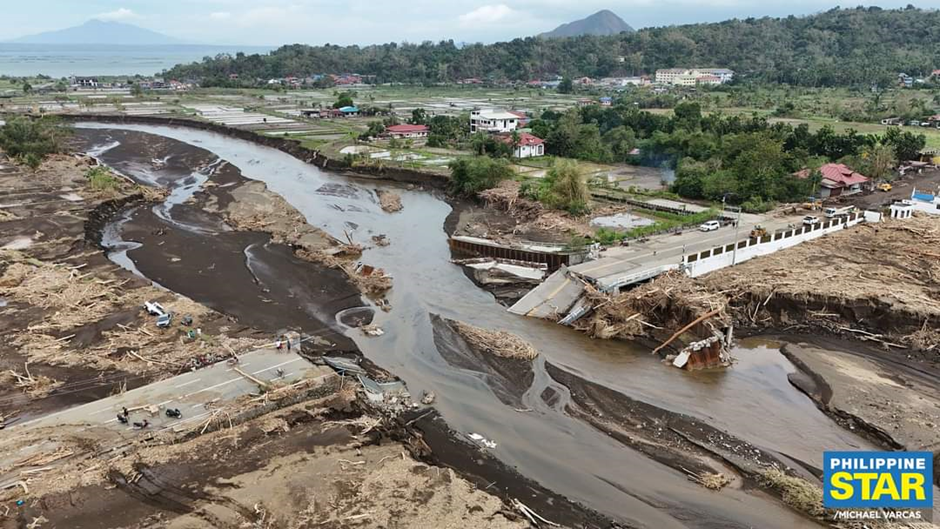
Private Sector Response: PDRF’s Coordinated Efforts to Support Humanitarian Response
Late October, to further strengthen response efforts, PDRF hosted a virtual Network Briefing with member and partner companies to assess the impact of Tropical Cyclones Trami and Kong-Rey, discuss immediate needs, and identify gaps in affected areas. Another briefing will take place on Friday 15 November at 11am local time, to continue the coordination given the on-going weather systems affecting the country.
This collaborative approach allowed the development of targeted resource mobilization plans, demonstrating the private sector’s unified commitment to disaster preparedness and response.
Beyond that, in response to the impacts of Tropical Cyclone Kristine and ensuing tropical cyclones, PDRF, an OCHA/UNDP Connecting Business initiative (CBI) Member Network, mobilized the private sector for widespread relief and support, including:
26,585 food packs provided
1,300 hot meals distributed
27,850 liters of water made available
6,750 hygiene kits provided
You can read more about the Tropical Cyclone Trami and Kong-Rey response here or read the PDRF press release here.
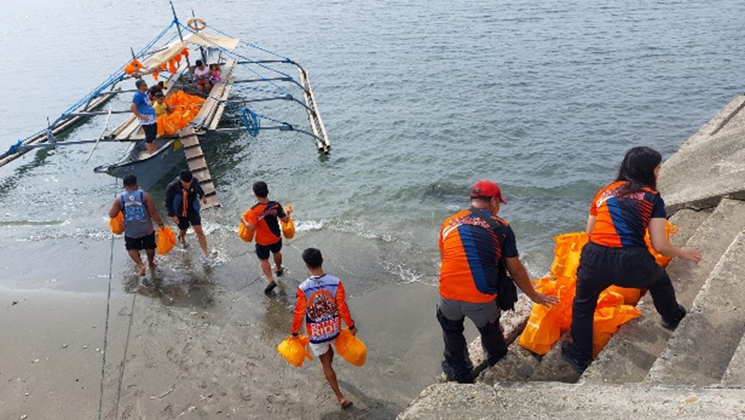
Take action – Private Sector Response
Businesses in areas affected by any of the aforementioned Tropical Cyclones are encouraged to connect with PDRF for support and guidance on disaster response and recovery efforts. PDRF can assist with coordinating private sector response efforts and mobilizing resources for livelihood recovery planning.
For assistance, please contact info@pdrf.org or visit www.pdrf.org.
Note: This emergency is on-going, and this page is subject to frequent updates.