The importance of every sector in disaster management
While myriad companies engage in climate action and resilience building activities through their corporate social responsibility (CSR) efforts, a growing number of businesses are taking it a step farther and integrating disaster management into their operations.
That’s why for this year’s World Humanitarian Day, taking place on Tuesday 19 August, we are putting the spotlight on the importance of business engagement in disaster management across sectors. Through examples from our partners, we wanted to showcase just how relevant every category of business can be to disaster preparedness, response, and recovery.
The role of the food & beverage and consumer goods sectors
From the Philippines to Ecuador, and from tropical cyclones and hurricanes to earthquakes, volcanic eruptions, and more, basic human needs remain the same. People affected by such events need shelter, food, water, and often hygiene and cleaning products among other items. These ensure their health, safety, and ability to regroup in a dignified manner before starting to recover and rebuild.
Companies such as ARCA/La Favorita, Coca Cola, Nestlé, PepsiCo, Sodexo, and others are working with CBI Member Networks to provide inventory ranging from non-perishable items, ready-to-go meals, water, and more. The agreements are often set up ahead of time so that in an emergency, the mobilization and distribution can happen efficiently – often leveraging the routes and delivery points used by these companies as part of their operations.
Working in a complementary manner, entities such as Nestlé, Proctor & Gamble, Unilever, and more provide in-kind donations and support ranging from hygiene and cleaning products and other inventory alongside adapted production lines and logistical corridors to support emergency response.
Whether they are working through a corporate foundation or not, companies are on the frontlines of emergency response, saving lives.
A spotlight on logistics as a cornerstone of any disaster management effort
Logistics encompasses everything from information-sharing and customs processes to warehousing and transportation by air, sea and road. Businesses in this sector leverage extensive networks of employees and partners to assess real-time conditions: is a road blocked, a port closed or an airport struggling with delays or capacity constraints? Based on the situation on the ground, companies such as Airlink, DHL, and Kuehne+Nagel—the three organizations interviewed for the recent CBI case study—solve problems on the go, supported by expert teams operating in the affected country or at headquarters.
However, logistics is about more than just transportation. Aid comes in many forms, some of which must be deconsolidated and reconsolidated for military or road transport, loaded onto trucks and connected to warehouses, requiring inventory management. Logistics also involves foresight: planning ahead, anticipating risks, securing procurement contracts and agreements and establishing partnerships to ensure rapid responses when requests come in.
All of this points to the importance of logistics in the context of emergency response, and the role business can play in providing powerful, life-saving solutions. Every example we give of business engagement in preparedness, response, or recovery involves logistics in one form or another.
Why every sector matters in disaster management
In the aftermath of the Kahramanmaraş-centered earthquake that devastated Türkiye and Syria in February 2023, TÜRKONFED, the CBI Member Network in Türkiye, developed a collaboration with Hepsiburada, an e-commerce platform. The aim: to support their member small and medium enterprises (SMEs) and businesspeople affected by the earthquakes by boosting their trade volume through e-commerce. The partnership includes dedicated support lines, advertising assistance, and reduced commission rates, enabling businesses to re-enter the digital market with strength.
When six tropical cyclones hit the Philippines within a month, the Philippine Disaster Resilience Foundation (PDRF) mobilized their partners to support those affected and displaced with in-kind donations ranging from meals as well as food packs, hygiene kits, drinking water and other items such as medicine to avoid waterborne diseases, blankets, and more. Companies also offered in-kind support such as charging centers and free calls to facilitate communications, and transport of donations to affected areas.
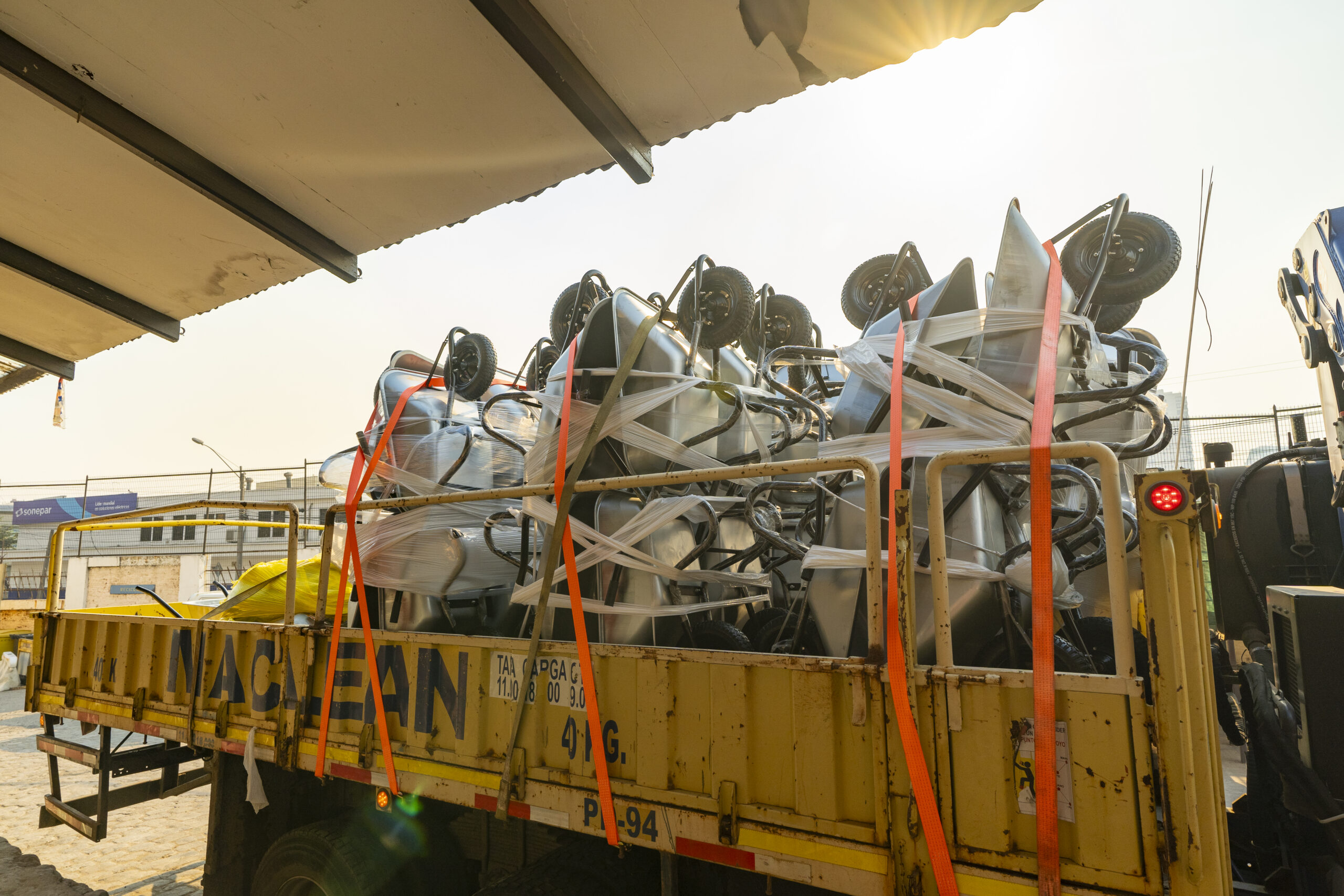
In Peru, Hombro a Hombro developed protocols for municipalities to be able to borrow heavy machinery from companies to facilitate the removal of debris after heavy rains caused landslides. They also supported the government by mobilizing more than 80 trucks in a short period of time to transport and restock warehouses with humanitarian aid in the aftermath of El Nino. Each of their efforts brings together the support of their member companies who provide in-kind and financial support from medical supplies to logistics, telecommunications, food and beverage for affected families, and more.
After Hurricanes Otis, John, and Erick, CENACED coordinated with 180 allied organizations including businesses to make sure that every sector and entity willing to help could do so. In doing so, they were able to magnify their impact to more families and communities supported in the immediate aftermath of the emergencies but also to rebuild and recover with dignity as well as prepare for the next crisis.
What these examples show is that every sector willing to participate in emergency response has its role to play.
“In Lima, Peru, we know it’s a matter of when, not if, a high-magnitude earthquake happens. In that context, if banks have a business continuity plan that’s all well and good, but if we don’t make sure that their plans connect with the energy and telecommunications sectors, it might be all for nothing,” explains Juan Manuel Arribas, Executive Director of Hombro a Hombro. “If the electricity grid isn’t up and running, ATMs won’t work and the banks won’t be online, no matter how prepared they are to be operational.”
“In Lima, Peru, we know it’s a matter of when, not if, a high-magnitude earthquake happens. In that context, if banks have a business continuity plan that’s all well and good, but if we don’t make sure that their plans connect with the energy and telecommunications sectors, it might be all for nothing. If the electricity grid isn’t up and running, ATMs won’t work and the banks won’t be online, no matter how prepared they are to be operational.”
– Juan Manuel Arribas, Executive Director of Hombro a Hombro
But that doesn’t only hold true for crises – it applies to preparedness and recovery as well. Consider the importance of warehouse space (and management) to have relief items pre-positioned ahead of time (as in the example from Peru, above), and the logistics of transporting the goods to where they need to be. The power of working with telecommunications companies to send out early warning messages before an emergency. The difference cash – whether physical or digital and blockchain powered – can make for people and communities to prepare and recover from crises in a more dignified manner.
The truth is that every sector can contribute to better collective preparedness, response, and recovery.
In the Philippines, companies such as Shell Filipinas are also investing in climate resilience by participating in a tree-planting initiative. As Rizanel Doroteo Celada explained, “I’m the secretary of Tayabasan Progressive Indigenous People Association, an indigenous people’s organization focused on planting and caring for seedlings in Tayabasan to prevent landslides and flooding during rains.”
That’s where the power of business networks, coordinating private sector engagement in disaster management, is a game changer. They enable collective action to foster true resilience by reinforcing preparedness, response, and recovery efforts, saving more lives and livelihoods through efficiencies of scale.
What can you do to foster resilience?
As an individual, you can champion investing in resilience within your family, community, or business.
As a business, if you’re not part of a chamber of commerce or association, you can join one that specifically has a workstream dedicated to disaster management and fostering resilience.
As a private sector network or business association, you can develop an area of focus specific to business continuity planning and resilience, and see how best to work with the government and United Nations agencies on disaster management.
And if you have any questions on how to do any of that, don’t hesitate to reach out to connectingbusiness@un.org. We’re here to help.