Connecting Business to Global Humanitarian and Climate Resilience in China
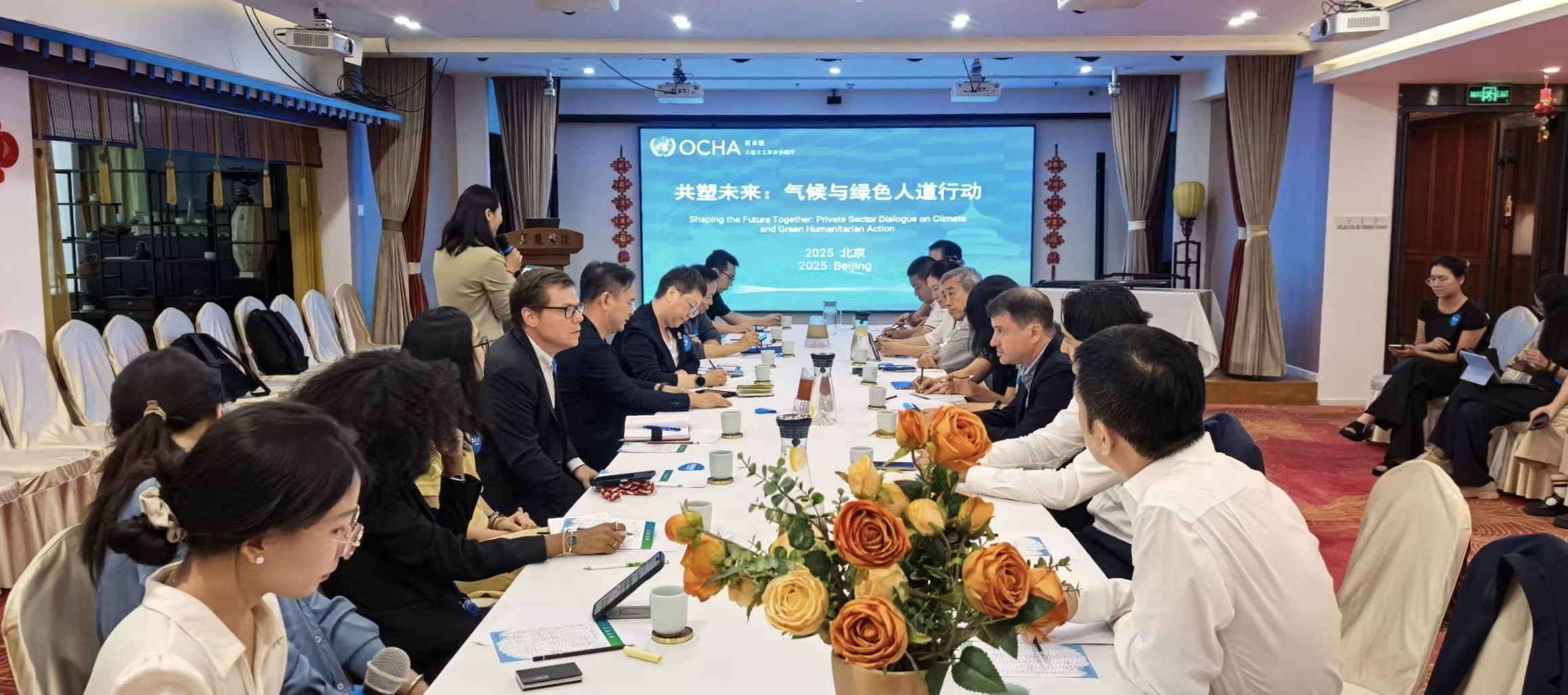
In a conference room at a traditional Chinese academy dedicated to promoting Chinese culture, voices in Mandarin and English filled the air. Around the table sat a diverse group of NGO representatives and business leaders from across China’s private sector – including companies in energy, infrastructure, consumer goods, finance, and digital innovation. They had come together to explore one important question: What role could they play in green humanitarian action and building climate resilience?
In a dynamic effort to bridge the gap between humanitarian needs and business capabilities, CBI and OCHA colleagues, in partnership with the Peaceland Foundation, convened a private sector roundtable discussion. The event brought together representatives from 17 leading Chinese companies, business associations, and philanthropic organizations – with a combined market valuation exceeding USD 500 billion – to identify shared priorities and co-create a path for future collaboration.
This roundtable was an important milestone and a significant step toward strengthening collaboration between the humanitarian community and business leaders in China.
Qiu Lili, Co-Founder of the Peaceland Foundation
Unlocking Chinese Private Sector Potential for Green Humanitarian Collaboration
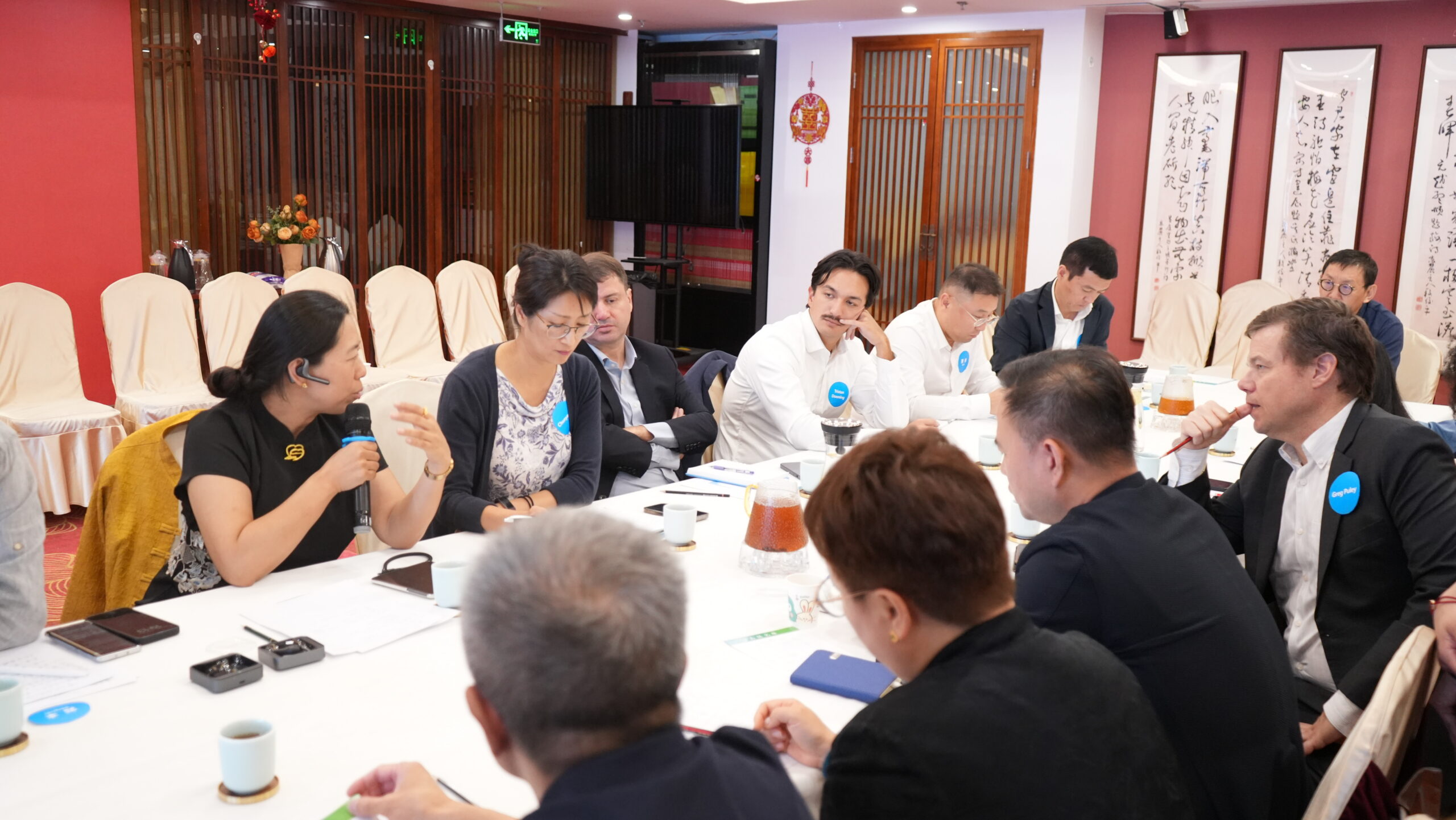
The roundtable opened with an introduction to the United Nations Office for the Coordination of Humanitarian Affairs (OCHA) and its work on climate and anticipatory action. As presentations unfolded, many participants were struck by the opportunities for private sector engagement, from digital payment and fundraising platforms to infrastructure development, clean energy solutions, climate-resilient products, and social investment.
The private sector has the tools, reach, and resources to make a real difference. By facilitating these dialogues, we can ensure companies are part of the innovative solutions when crises hit.
Danxi Shen, Secretary-General of the Sany Foundation
Guided by its mission to “help guard the world against fear of disasters’ deadly impact on humanity,” Sany Group and the Sany Foundation reaffirmed their commitment to leveraging heavy machinery for effective disaster response. Over the past three years, the Foundation has supported relief efforts following earthquakes in Türkiye (2023), Tibet (2025), Myanmar (2025), as well as mine clearance operations in Cambodia, reflecting its growing global engagement. The Foundation expressed interest in deepening collaboration with OCHA through initiatives such as deploying machinery across international rescue networks, co-developing technical standards and training programmes for emergency operations, and advancing anticipatory action to strengthen local capacity and resilience.
JOMOO Group, a leading sanitary products company, shared its experience in providing sustainable sanitation solutions for disaster relief. With a strong focus on green innovation, JOMOO integrates eco-friendly materials and innovative technologies to reduce costs and environmental impact while addressing urgent humanitarian needs. One key use case is the deployment of waterless sanitation facilities in disaster-affected areas to help prevent disease outbreaks.
Other participants also shared their ongoing work on disaster response and environmental, social, and governance (ESG) strategies, expressing openness to explore models for global humanitarian support through joint visibility, partnerships, and impact-driven initiatives.
A Promising Beginning
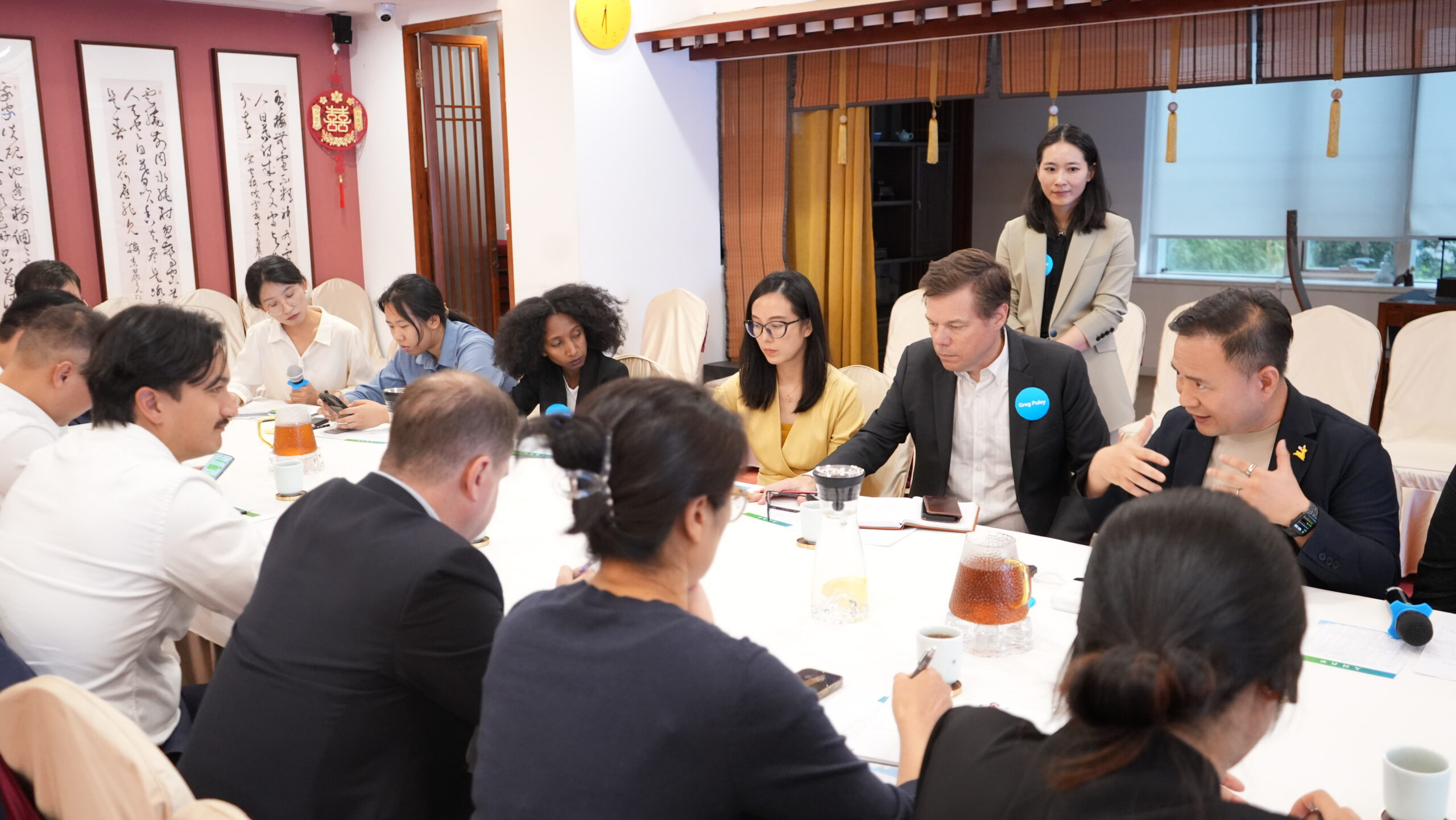
As today’s humanitarian challenges become more complex, the role of the private sector in humanitarian action is more important than ever. A clear message emerged from the roundtable: no single actor can do it alone. Effective humanitarian action requires cross-sector partnerships and continuous learning – an insight well illustrated by the example of Yili Group, Asia’s largest dairy company.
A pioneer in climate resilience, Yili developed a climate change contingency plan as early as 2007 and has prioritized resilient supply chains and disaster preparedness and response for over 18 years. In partnership with Tencent and Lenovo, the company recently launched the “Sustainable Social Value Ecosystem”, one of the goals of which is to identify and support disaster-affected households across China. Yili’s approach can be summed up in three words: ecosystem, practice, and benchmarking.
Benchmarking is not just about setting standards — it’s also about learning from others. Peer-to-peer learning, both within China’s private sector and through global partnerships, is essential to improving humanitarian responses and maximizing impact.
Qiao Lu, Vice President of Sustainable and Social Value at Yili Group
As co-hosts, OCHA and CBI left the meeting inspired by what is already being done by Chinese organizations to invest in resilience, as well as the desire to work together. We are committed to both finding tangible ways to collaborate and give visibility to all the important work happening on the ground, and will continue to share progress as it takes shape. With growing interest and shared dedication, this roundtable marks not an end, but a promising beginning.