Rebuilding hope – how Vanuatu’s Private Sector is leading earthquake recovery
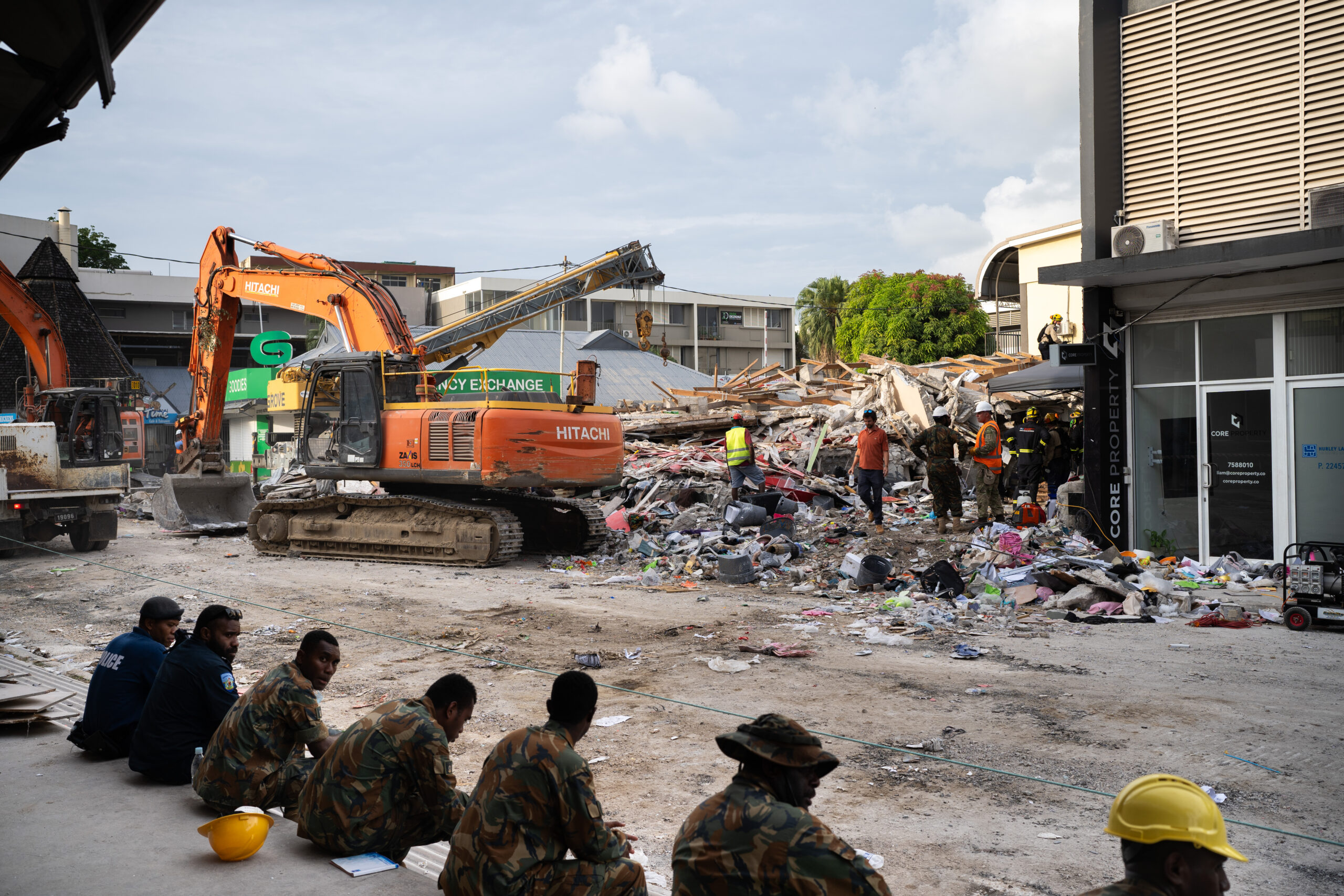
When the 7.3 magnitude earthquake struck near Port Vila on December 17, 2024, it left devastation in its wake—14 lives lost, over 265 injured, and more than 2,400 displaced. The disaster damaged critical infrastructure, from roads and water reservoirs to communication systems, leaving the nation of 300,000 population stunned. Yet, amidst the chaos, a story of resilience began to emerge, with a strong role played by the private sector. This is thanks in great part to the unwavering efforts of the Vanuatu Business Resilience Council (VBRC), a CBI Member Network.
VBRC mobilised within hours of the crisis, quickly providing essential needs assessments to guide Government emergency actions. Working with development partners, they helped facilitate the procurement of Starlink technology to support the National Disaster Management Office (NDMO) with communications. Private sector members secured vital resources, including refrigerated containers for Vila Central Hospital. Through coordinated efforts with key stakeholders, essential services including supermarkets, banks, and insurance companies resumed operations within days of the disaster.
“We are deeply committed to not just restoring what was lost, but to building a stronger, more resilient Vanuatu,” said Glen Craig, Chair of the VBRC. “Although disasters have tested us before – there’s a reason why Vanuatu ranks at the top of the Climate Risk Index – earthquakes are not something we have fully prepared ourselves for. But this crisis has reinforced the power of collaboration between the private sector, Government, and our international partners.”
“We are deeply committed to not just restoring what was lost, but to building a stronger, more resilient Vanuatu. Although disasters have tested us before – there’s a reason why Vanuatu ranks at the top of the Climate Risk Index – earthquakes are not something we have fully prepared ourselves for. But this crisis has reinforced the power of collaboration between the private sector, Government, and our international partners.” – Glen Craig, Chair of the Vanuatu Business Resilience Council (VBRC)
VBRC’s commitment extends beyond immediate relief. In partnership with the Vanuatu Chamber of Commerce and Industries (VCCI), they launched a live business status database to understand and address the needs of affected businesses. While the data highlighted the challenges—21% of businesses remained closed, and 15% faced physical damage, loss of equipment and of stock—it also revealed a spirit of determination, with 44% fully operational and 40% planning to reopen within a month.
With the State of Emergency now concluded, VBRC has transitioned to supporting VCCI, who are leading the recovery phase in close coordination with the Vanuatu Government. VCCI is working directly with the Ministry of Trade and Commerce, who are spearheading economic impact assessments and response options. This partnership has been particularly crucial in coordinating with the Public Works Department and engineers regarding the reopening of the Central Business District (CBD).
As part of the Economic Sub-committee on Recovery, VBRC has completed comprehensive surveys to determine appropriate financial assistance measures for affected businesses. These survey results are now available to guide targeted support initiatives. This data-driven approach ensures that recovery efforts address the specific needs of the business community while supporting broader economic rehabilitation.
Looking ahead, VBRC is working closely with the Government to rebuild Port Vila into a more modern, vibrant city. The newly approved Special Category Visa programme, championed by VBRC, allows businesses to recruit skilled specialists for reconstruction, accelerating recovery while prioritizing local employment.