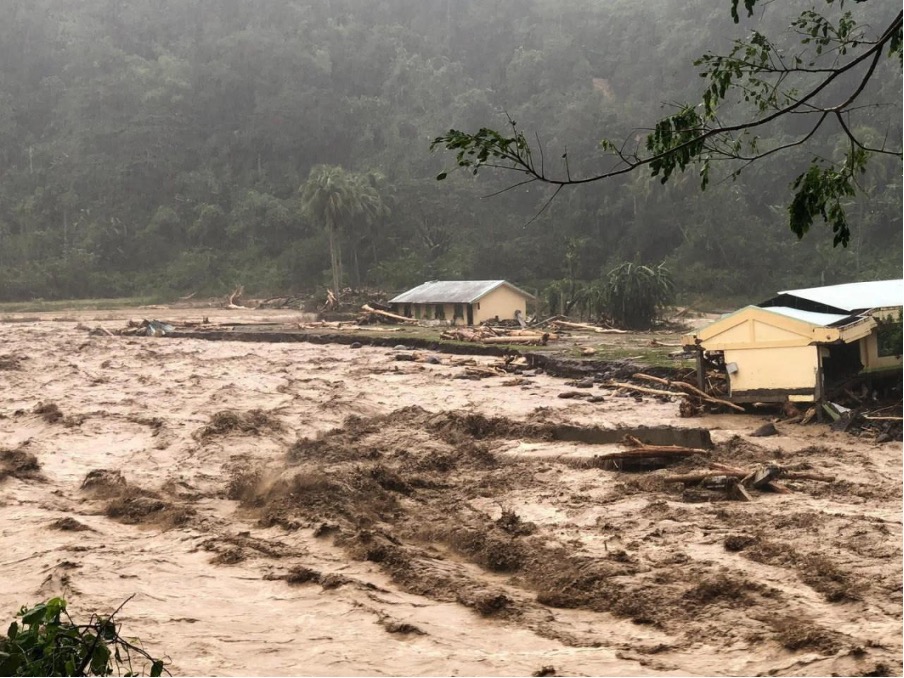
The Philippines is reeling from the impact of two successive typhoons that struck within two weeks, compounding the strain on already stretched disaster response capacities.
On 2 November, Typhoon Kalmaegi (Tino) brought severe flooding and flash floods across the Visayas, leaving more than 210 people dead and over 100 missing. A week later, on 9 November, Super Typhoon Fung-Wong (Uwan) made landfall in Aurora with winds reaching 185 km/h, affecting 13 of the country’s 18 regions. Early warnings helped authorities evacuate more than 1.5 million people before landfall. Typhoon Tino affected over 4.1 million people, displacing 379,000, mostly sheltering with relatives or friends. Around 155,000 houses were damaged, with over 20,000 destroyed. Meanwhile, Super Typhoon Uwan impacted 2.7 million people, leaving 1.18 million displaced and over 11,600 evacuation centers in use.
These disasters follow a series of severe events since late September, including multiple typhoons and two major earthquakes, which have severely strained national and humanitarian response capacities.
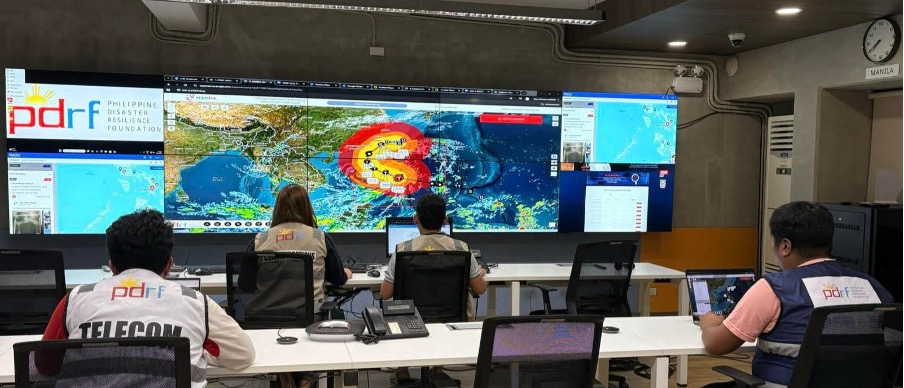
The Philippine Disaster Resilience Foundation (PDRF) activated its Emergency Operations Center (EOC) at the onset of the recent cyclones and remains on Blue Alert as Severe Tropical Storm Uwan exits the Philippine Area of Responsibility (PAR) but continues to affect parts of the country.
Private Sector Mobilization and Response Efforts
PDRF, a member network of the OCHA–UNDP Connecting Business initiative (CBI) and the private-sector representative in the Humanitarian Country Team, has mobilized its network to support communities affected by Typhoon Uwan (Fung-Wong) and preceding Typhoon Tino (Kalmaegi).
At the onset of the storms, PDRF activated its Business Emergency Operations Center (EOC) under Yellow and moved to Blue Alert status to coordinate information, logistics, and private sector support. On 11 November, PDRF convened a virtual network briefing titled “Strength in Coordination” to align resource mobilization efforts and facilitate coordination among private sector partners responding to the impacts of the typhoon. Attended by over 80 partners, the briefing outlined a forecast, situation update, immediate needs and response plans, and an open call for donations, support on resource requirements, and volunteer efforts.
Major corporate members, including Meralco, Maynilad, Manila Water, Coca-Cola Beverages Philippines, Ayala Foundation, Aboitiz Foundation, San Miguel Foundation, and PLDT-Smart Foundation have mobilized critical relief assistance, including power restoration, water supply, communication support, food and non-food items, and logistics services to reach affected families.
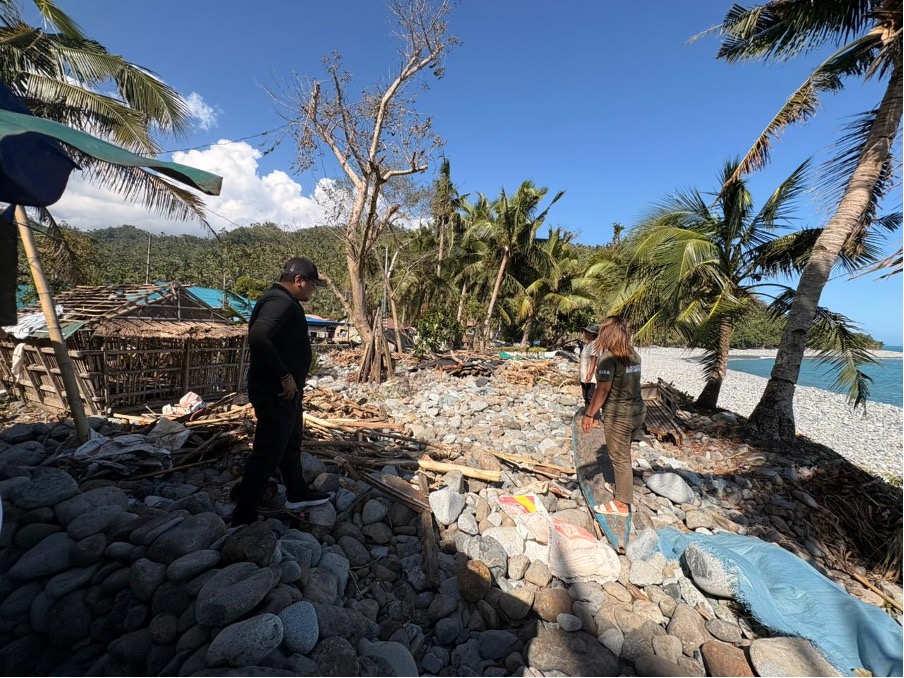
To complement national response operations, PDRF deployed a team to Aurora Province, one of the areas hardest hit by Typhoon Uwan. Working closely with the Provincial Social Welfare and Development Office (PSWDO) and local governments, the team assessed needs, identified logistics and supplier requirements, and coordinated the distribution of relief assistance to priority communities, including Dinalungan, Dipaculao, and Baler.
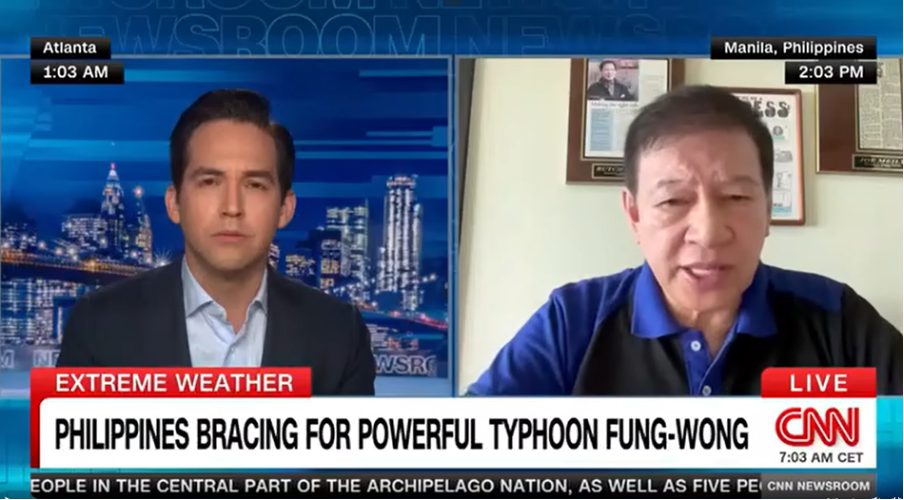
PDRF President Rene “Butch” Meily also provided updates through interviews with ABS-CBN, BBC, and CNN, emphasizing the importance of preparedness, coordination, and private sector solidarity in ensuring timely and effective disaster response.
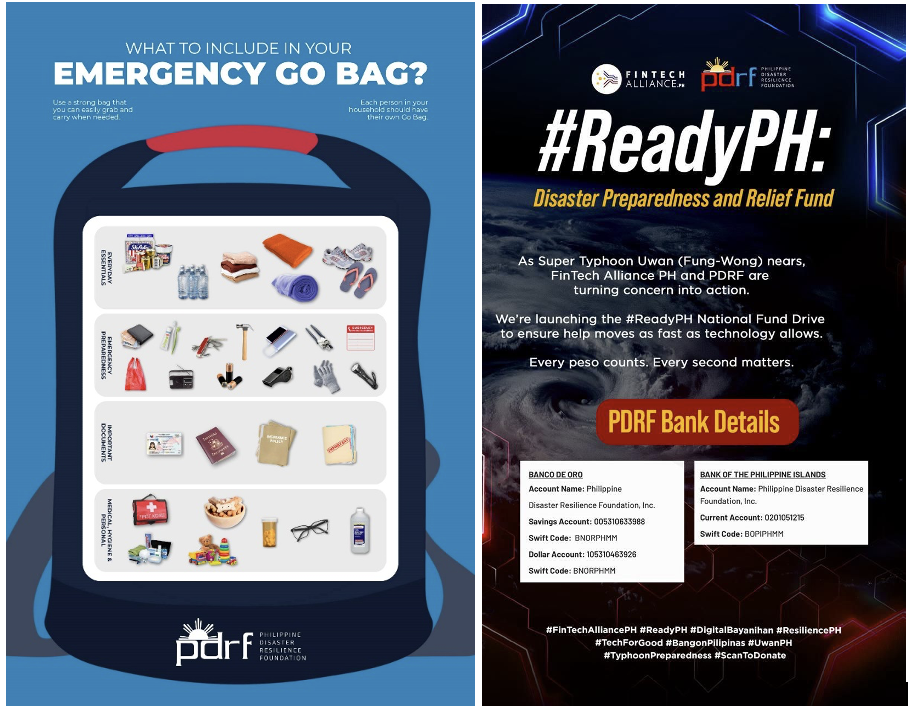
As part of its early preparedness measures, PDRF partnered with FinTech Alliance PH to launch the #ReadyPH Fund, a nationwide digital bayanihan drive seeded with a PHP 100,000 (approx. USD 1,700) donation to mobilize rapid assistance for high-risk communities. PDRF also reinforced early warning efforts by reminding families to keep their emergency go bags ready with essentials—food, water, medicine, clothes, and important documents enough to last 72 hours. Readiness and solidarity remain key to saving lives before disaster strikes.
As recovery efforts continue, PDRF remains in close coordination with the National Disaster Risk Reduction and Management Council (NDRRMC), the Department of Social Welfare and Development (DSWD), and its extensive network of private sector partners to ensure sustained support to the most affected communities.
How to help?
PDRF continues to work with the government and humanitarian agencies to coordinate private sector response and recovery efforts.
For further information on how to help and coordinate directly with local actors, please visit www.pdrf.org/how-you-can-help/donate/ or contact the PDRF emergency operations center at opscenter@pdrf.org.ph and/or connect with Rhiza Nery at florian.nery@un.org.