
Updated 6 November 2025
The Caribbean remains one of the most disaster-prone regions globally, facing annual threats from tropical cyclones, earthquakes, volcanic activity, and other natural hazards. In 2025, climate change continues to amplify the intensity and unpredictability of these events. Record-warm Atlantic Ocean temperatures and neutral El Niño–Southern Oscillation conditions have created a highly conducive environment for hurricane formation and rapid intensification.
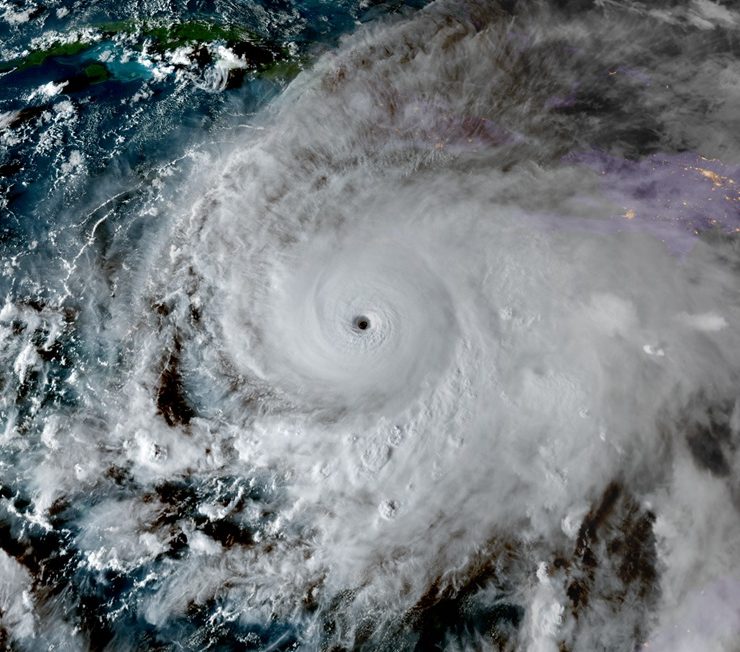
Hurricane Melissa began as a slow-moving tropical storm in the central Caribbean but rapidly intensified over record-warm waters, reaching Category 4 strength by October 26, 2025. The National Oceanic and Atmospheric Administration (NOAA) has indicated that in Jamaica, landfall as a major hurricane is expected, life-threatening storm surge, flash flooding, and landslides. In Haiti, especially the southwest, extreme rainfall may cause severe flooding and isolation, prompting evacuation alerts. Eastern Cuba faces hurricane watches, with heavy rain and flooding risks by Tuesday night.
Hurricane Melissa made history on October 28, 2025. The Category 5 storm struck western Jamaica with 185 mph winds – the strongest ever recorded in the nation’s history. Jamaican authorities declared a disaster area and the NOAA reported “catastrophic flash flooding”.
The full scale of Hurricane Melissa’s devastation is still unfolding across the Caribbean. The death toll across the Caribbean has climbed to at least 50 – including 31 in Haiti, where 21 people remain missing. In Jamaica, the hardest-hit island, 1.6 million people have been affected, and 25,000 are currently displaced or sheltering, according to the Caribbean Disaster Emergency Management Agency (CDEMA)..
Power restoration is progressing but remains critical: more than 60 percent of the island is still without electricity, and nearly half of water systems are offline.
In a vital step toward recovery, the Caribbean Catastrophe Risk Insurance Facility (CCRIF SPC) has triggered Jamaica’s catastrophe bond – an innovative financial mechanism supported by the World Bank. So far, two payouts totaling $91.9 million have been disbursed to support emergency response and rebuilding efforts.
The humanitarian impact on peoples live is severe. After devastating Jamaica, Hurricane Melissa made a second landfall in Cuba on October 29 as a Category 3 hurricane. The storm brought unprecedented flooding, and more than 735,000 people had to be sheltered due to the overflowding of the Cauto River. Melissa continued to barrell through the Bahamas and Bermuda before finally leaving the region.
Against this backdrop, the private sector has stepped forward in unprecedented ways. CBI,working with the Network of Caribbean Chambers of Commerce (CARICHAM) and its constituent members, as well as with the Caribbean Disaster Emergency Management Agency (CDEMA),CARICOM Private Sector Organization (CPSO), and humanitarian actors to facilitate aid delivery.
Mobilizing the private sector to support humanitarian response
In Jamaica, retailers such as Hi Lo Food Stores boosted inventories to guarantee continuity of essential supplies, while the Private Sector Organisation of Jamaica coordinated food distribution in partnership with the Army and Police. Digital solutions are also being deployed: CorpCare and the Monday.com Foundation have introduced platforms to track donations and improve transparency, enabling faster mobilization of resources.
The Jamaica Chamber of Commerce, a member of CARICHAM, has been coordinating with the business community and with relevant government authorities to ensure that adequate preparedness measures have been undertaken. The Jamaica Chamber has surveyed distributors of food stuff and personal items, and they have supplies on the ground equivalent to 6 weeks to 3 months of supplies. Essential supplies have been pre-positioned across the island so that can be quick to supply those in need.
Regional chambers through CARICHAM and CPSO activated joint mechanisms to mobilize support across CARICOM, with donation accounts and logistics hubs established in Trinidad & Tobago, Barbados, and Guyana. Construction materials, food items, and financial contributions are being coordinated through these networks, underscoring the strength of regional solidarity.
Recognizing that many companies have subsidiary operations in Jamaica, CPSO initiated coordination efforts with the Joint Chambers and identified potential supplies such as water and storage tanks, which are expected to be actioned shortly. A follow-up meeting is scheduled for with Joint Chambers, BSOs, OCHA/CBI, and CARICHAM to further consolidate a unified CARICOM private sector response. Dr. Patrick Antoine, CPSO’s Executive Director, confirmed that several companies are prepared to contribute, with interventions possibly beginning as early as Monday, October 27. Meanwhile, the Caribbean Disaster Emergency Management Agency (CDEMA) is awaiting clearance to proceed with Jamaica’s official needs list, while Haiti has finalized its own, which is available online.
CBI’s focal point in the Caribbean is working to encure that contributions from the private sector are effectively coordinated, getting where they are needed most, and complementing local response efforts. When Sprung Structures offered to donate 25 emergency tents to support shelter needs in Jamaica, CBI linked them with the Shelter Working Group. Moreover, they coordinated with logistics partners like Airlink and the World Food Programme CDEMA Logistics Cell to ensured that delivery routes and storage options were in place for the effective deployment of tents.Assisting with urgen medical needs, Direct Relief delivered emergency medical supplies across Jamaica, Cuba, Haiti, and the Dominican Republic. CBI connected the NGO with the Pan American Health Organization and the Health Working Group, ensuring shipments were aligned with national priorities and reached the facilities most in need.
Similarly, when the Monday.com Foundation offered its donation tracking platform to the Private Sector Organisation of Jamaica (PSOJ) and local partner CorpCare. CBI convened the partners, guided onboarding, and helped tailor the tool to local requirements. The platform now provides transparent, real‑time tracking of contributions, strengthening coordination and accountability.
CBI engages with CARICHAM and the CARICOM Private Sector Organization (CPSO) to lead the Private Sector Thematic Working Group (TWG) in the Caribbean Partners Development Group for Disaster Management (CDPG-DM). The CDPG-DM is a coordination platform led by CDEMA and the United Nations Resident Coordinator of the threatened/impacted area and gathers more than 100 representatives from humanitarian and development organizations, as well as donors and regional organization and entities. The TWG is actively engaging with the members and chambers of commerce, sharing information and providing support as requested.
How to help?
This is where the private sector can make a real difference by helping scale up transport, storage, energy systems, communications, and supply chains to deliver at the speed and scale required.
A newly established Private Sector Coordination Committee in Jamaica, supported by OCHA PSU, is now linking national institutions, UN agencies, and business actors to streamline engagement. More than 31 organizations have been engaged across sectors ranging from food relief and shelter to logistics, medical supplies, and telecommunications.
The Network of Caribbean Chambers of Commerce (CARICHAM) is the regional CBI Member Network, bringing together 25 Caribbean business federations collectively representing over 160,000 local businesses.
The CARICOM Private Sector Organization (CPSO) is an Associate Institution of the Caribbean Community, established to facilitate structured engagement between the regional private sector and CARICOM’s governing bodies. CPSO serves as a service organization dedicated to mobilizing and advancing private sector participation in the CARICOM integration process.
Caribbean businesses affected by Hurricane Melissa or wishing to support humanitarian relief operations are strongly encouraged to work with and through CARICHAM and CPSO. For more information, contact connectingbusiness@un.org and we can connect you.
CBI provides advice and support to regional and multinational companies on how best to provide assistance in coordination with the UN and national and regional disaster management authorities. For more information, please write to connectingbusiness@un.org or Ms. Carol Sanchez, CBI Regional Lead for the Caribbean at sanchez21@un.org.
Visit the ReliefWeb Response Hurricane Melissa emergency page at for the latest situation reports, flash updates, maps, infographics, and more.
Featured image by The Cooperative Institute for Research in the Atmosphere at Colorado State University and the National Oceanic and Atmospheric Administration (CSU/CIRA & NOAA).