A “Small Islands, Big Voices”: Vanuatu’s Historic Victory for Climate Justice

It was a moment years in the making, and yet, when the International Court of Justice (ICJ) finally delivered its historic advisory opinion on climate change, the emotion was overwhelming. Inside the Great Hall of Justice in The Hague, as the world’s highest court affirmed that States have binding legal obligations to prevent climate harm and protect future generations, the Pacific stood tall.
At the heart of this landmark moment was Vanuatu — a small island state that helped lead a global movement.
For Glen Craig, long-time advocate and former Chair of the Vanuatu Business Resilience Council (VBRC), the verdict was personal. “We always knew the Pacific had something powerful to say,” he shared. “We’re on the frontlines. We’re not asking for charity — we’re demanding justice.”
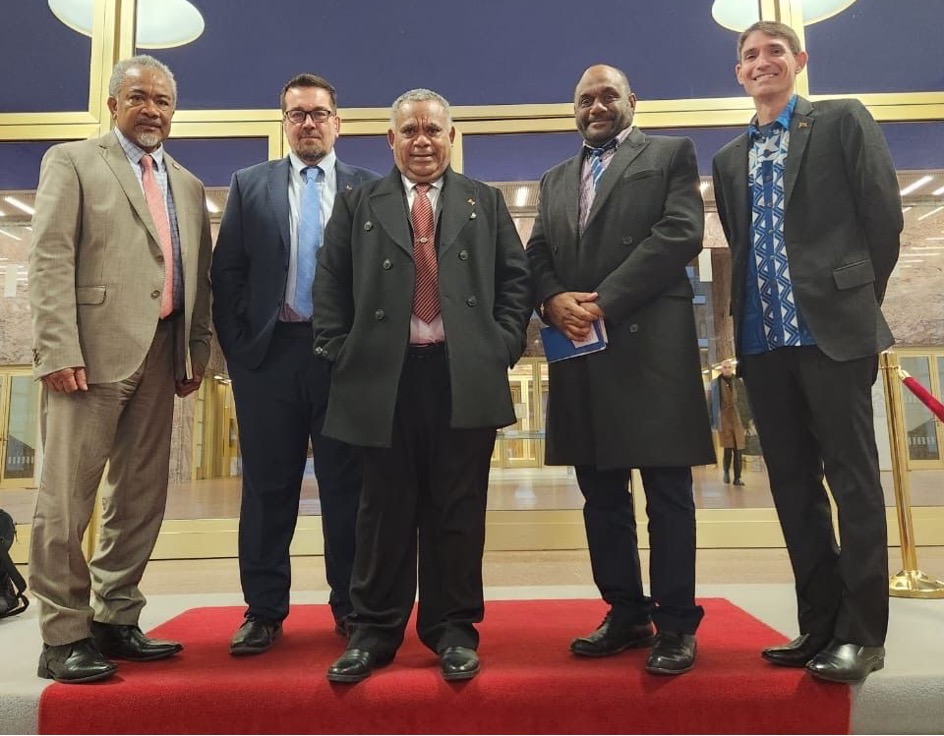
The road to The Hague began humbly in April 2021, around kitchen tables and on late-night Zoom calls. Vanuatu’s Climate Diplomacy Taskforce was formed, a coalition of lawyers, diplomats, civil society, private sector leaders, and students, united by a single idea: to ask the ICJ whether climate inaction was a breach of international law. That question would reshape climate law as we know it.
Dr. Christopher Bartlett, who served as Climate Diplomacy Project Manager, recalled the pressure and the purpose: “This was a Pacific-led campaign, but it became a global legal effort. The stakes were existential, not only for Vanuatu but for every child born into a climate-threatened world.”
VBRC played a unique role in this journey. As the government’s recognized private sector coordination body, the Council helped fund and staff the Taskforce from its earliest days, with support from ClimateWorks Foundation and the Campaign for a Climate Emergency Global. Over three years, VBRC offered more than just resources, it offered resilience.
“We saw how climate impacts were already devastating Vanuatu’s small businesses, which make up 95% of our economy,” Craig said. “We knew we had to be at the table, not just as witnesses, but as changemakers.”
The result is a unanimous advisory opinion from the ICJ that confirms:
- States must act with due diligence to prevent significant climate harm;
- Obligations under the UNFCCC and Paris Agreement are legally binding;
- Breaches may require cessation, non-repetition, and compensation;
- These are erga omnes obligations, owed to all peoples, including future generations.
Importantly, the Advisory Opinion offers the clearest interpretation to date that continued State-supported fossil fuel activity, such as the production and consumption of fossil fuels, the granting of exploration licenses, or the provision of subsidies, may amount to a breach of international law. States that fail to take appropriate action to protect the climate system from greenhouse gas emissions risk committing internationally wrongful acts for which they may be held accountable.
Prime Minister Jotham Napat, Minister Ralph Regenvanu, and legal advisers from around the world rallied to make it happen. But the roots remained in the Pacific, including with the law students at the University of the South Pacific who first dared to imagine this bold legal step.
“This was more than legal history,” Bartlett said. “It was mana. A generational statement of leadership from the Pacific to the world.”
VBRC is honoured to have been part of this chapter — standing alongside those who fought not just for laws, but for lives.