
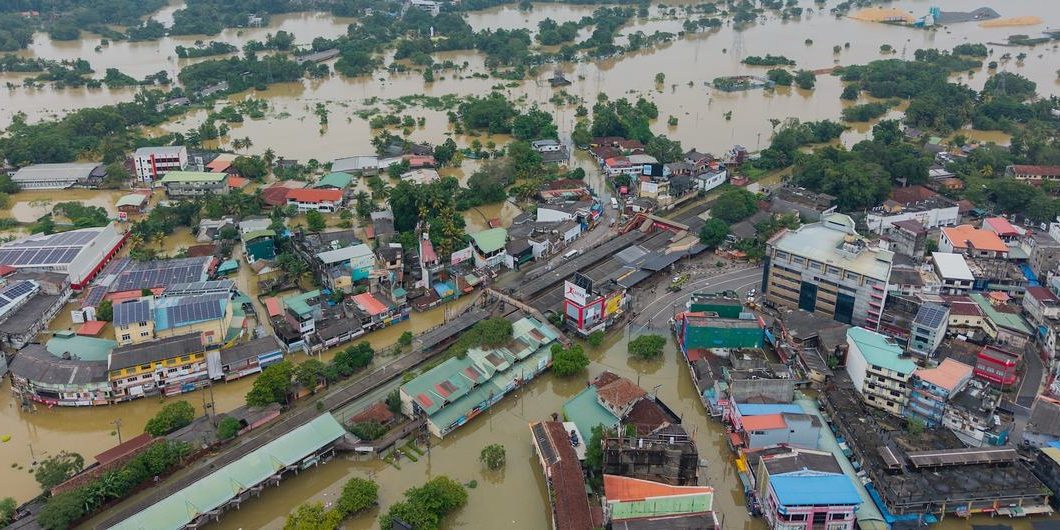
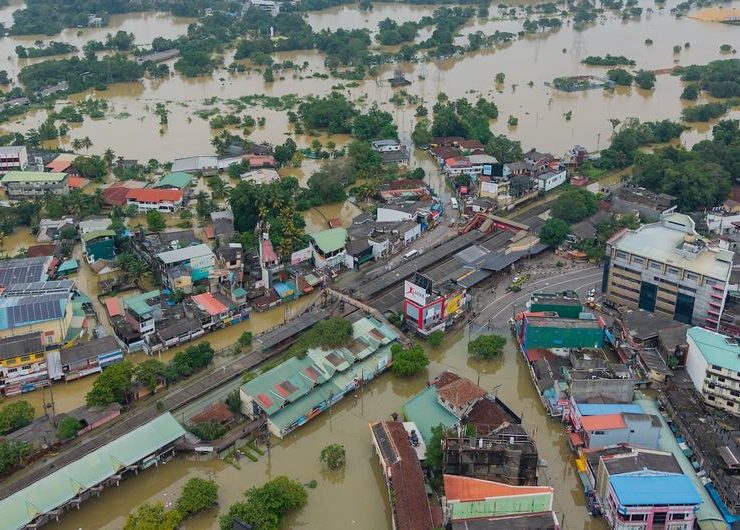
Sri Lanka experienced its worst flooding in over two decades following intense rainfall brought by Cyclone Ditwah. The cyclone struck during the transition between the inter-monsoon period and the northeast monsoon, intensifying rainfall and triggering widespread floods and landslides across all 25 districts, with 22 districts declared National Disaster Affected Areas. In total, around 2.2 million people were affected, with 639 deaths confirmed and 193 people reported missing.
At the peak of the emergency, more than 233,000 people were displaced, sheltering in 990 safety centres nationwide. The impact on housing and infrastructure was severe, with approximately 86,000 homes damaged or destroyed, including over 5,300 fully destroyed, alongside extensive damage to roads, railways, power, and water systems that restricted access to many affected areas.
The response has been guided by the Sri Lanka Humanitarian Priorities Plan (HPP), which outlines urgent, time-bound assistance from December 2025 to April 2026. The plan identified 1.2 million people in need and prioritized 658,000 of the most vulnerable for life-saving support across key sectors, including food security, health, water and sanitation, shelter, protection, education, and early recovery. To deliver this response, the HPP requires US$35.3 million, of which US$4.5 million has been allocated through the UN Central Emergency Response Fund (CERF) to support immediate life-saving interventions.
Response from the private sector
Emergency Response and Private Sector Coordination
From the onset of the floods, the Asia Pacific Alliance for Disaster Management – Sri Lanka, the CBI member network in the country worked closely with the Disaster Management Centre (DMC), the National Building Research Organization (NBRO), and local authorities to monitor evolving risks and access constraints. This coordination enabled timely information-sharing with private sector partners and supported needs-based assistance, reducing duplication and uncoordinated relief.
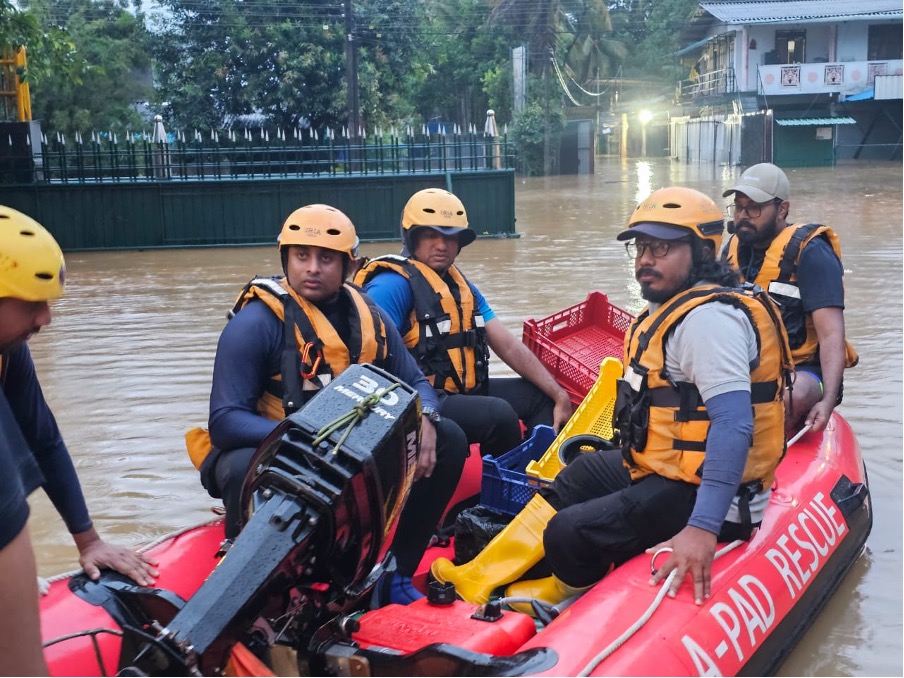
A-PAD Sri Lanka’s Search and Rescue (SAR) teams were deployed to high-risk urban and industrial areas, where floodwaters had trapped residents and workers inside homes, boarding houses, and company facilities. SAR teams carried out multiple rescue operations, safely evacuating affected individuals, supporting on-site safety assessments, and delivering emergency food assistance. Equipment was cleaned and maintained to ensure continued readiness as operations extended over several days.
Citizen-Led Humanitarian Support in Dematagoda
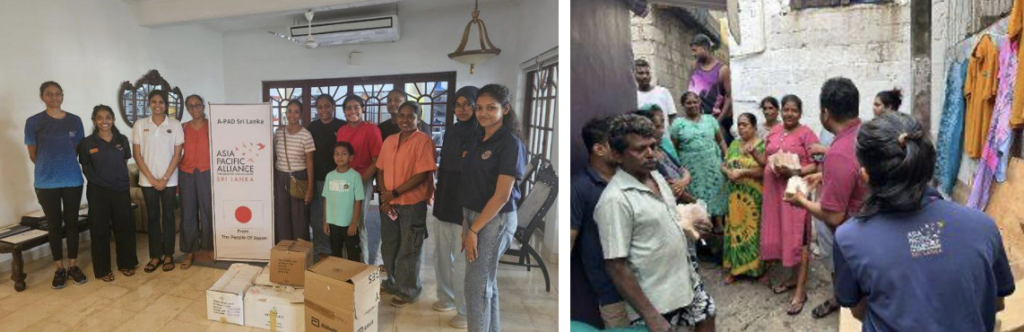
In the early days following Cyclone Ditwah, A-PAD Sri Lanka supported a citizen-led response in Dematagoda, Colombo, to address immediate food needs among flood-affected families. Working closely with the Thimbirigasyaya Divisional Secretariat and local Grama Niladhari, A-PAD helped identify households that were unable to access basic meals due to sudden evacuation and flooding.
On 30 November 2025, with the support of local citizens, 250 snack packs were prepared and distributed, first at the temporary safety centre at Sama Viharaya, and subsequently delivered directly to households in flooded lanes, including Mahawila and Gnanawimala Roads. The intervention reached over 200 people during a critical period and highlighted the effectiveness of community-led humanitarian action. Engagement with residents also surfaced key concerns around safety, reluctance to evacuate due to fear of theft, and urgent needs for clothing, bedding, and dry rations, underscoring the importance of localized, trust-based response efforts.
Collective Action Through the Sirasa–Shakthi Sahana Yathra
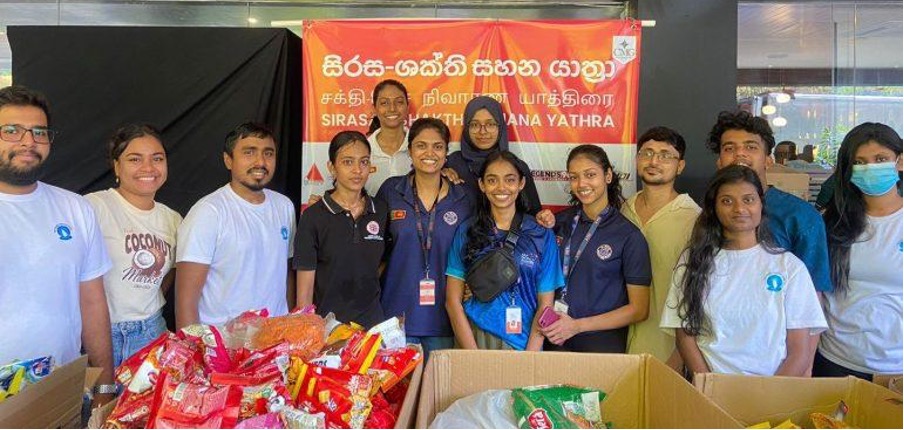
As displacement increased and access challenges intensified, A-PAD Sri Lanka expanded its engagement to support large-scale relief efforts. On 4 December, Team A-PAD joined forces with volunteers from Pearl Protectors and the University of Colombo, contributing to the Sirasa–Shakthi Sahana Yathra flood relief campaign led by MTV Networks. This initiative focused on preparing and dispatching dry ration packs to safety centres across the country.
Volunteers worked together to sort, pack, and prepare essential food and non-food items, ensuring timely support for displaced families. Relief supplies were delivered through a combination of boat transport and air drops, enabling assistance to reach communities where roads remained submerged or inaccessible. The campaign brought together civil society groups, youth volunteers, and everyday citizens, reflecting a strong spirit of solidarity and community-led action during the emergency phase.
Supporting Displaced Families in Mutur, Trincomalee
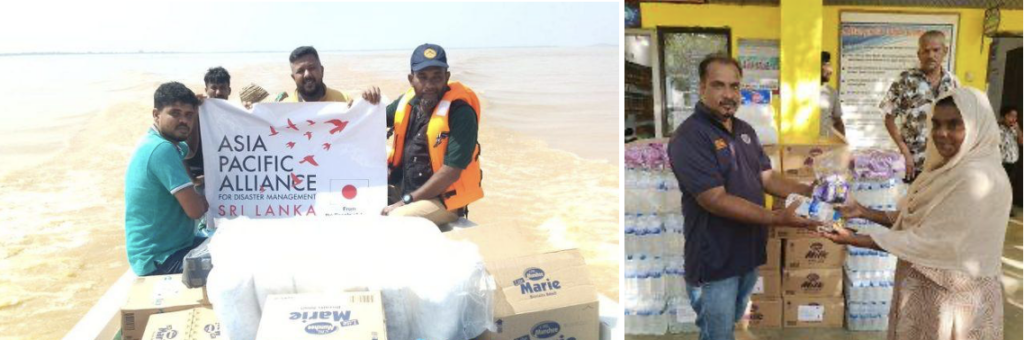
In Mutur, Trincomalee District, severe flooding forced families to seek refuge in schools converted into safety centres. A-PAD Sri Lanka mobilized teams to support displaced households sheltering in five major safety centres. With access routes submerged, volunteers used boats to reach affected areas and deliver emergency food packs and hygiene items.
Working in close coordination with local authorities, A-PAD Sri Lanka ensured assistance reached families facing immediate shortages of food, clean water, and sanitation. Despite challenging conditions, community resilience remained evident, with local leaders and volunteers supporting distribution efforts.
Field Observations and Targeted Relief in Neelabemma, Puttalam
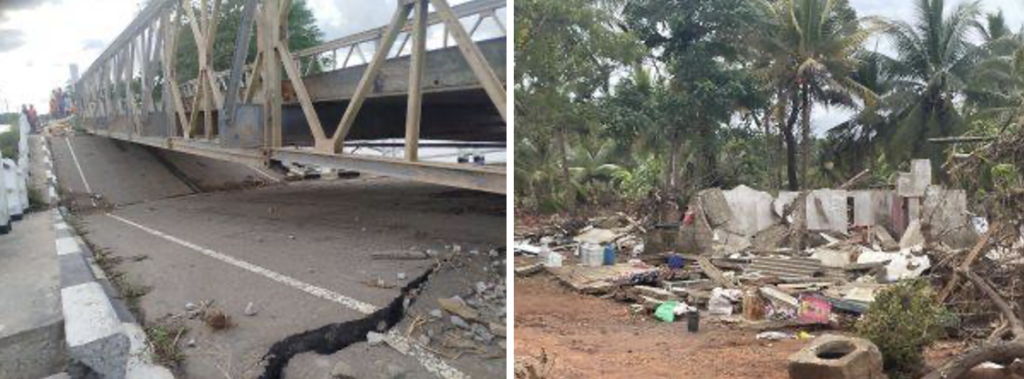
As floodwaters began to recede, A-PAD Sri Lanka undertook field-level assessments to better understand the depth of impact and emerging recovery needs. In Neelabemma, a rural village within the Karuwalagaswewa Divisional Secretariat of Puttalam District, the effects of Cyclone Ditwah were particularly severe. Access to the area was constrained by damaged infrastructure, including the collapse of a key bridge at Thabbowa Wewa along the Puttalam – Anuradhapura – Trincomalee Road, which was only temporarily restored to allow limited movement. Internal roads were eroded or blocked by debris, leaving communities largely isolated.
Housing damage was extensive, with many homes destroyed or reduced to rubble, and others partially damaged. Families reported losing shelter, household belongings, and food stocks within hours, forcing many to live in makeshift shelters or damaged structures without reliable access to water or sanitation. Agricultural lands were also heavily affected, destroying crops and placing farming households at risk of prolonged economic hardship.
Essential services remained disrupted, with fallen power lines cutting electricity to large areas. Central Electricity Board (CEB) teams were observed working under difficult conditions to restore connections, while community volunteers assisted with debris clearance and temporary shelter construction.
Relief Distribution and Transition to Early Recovery
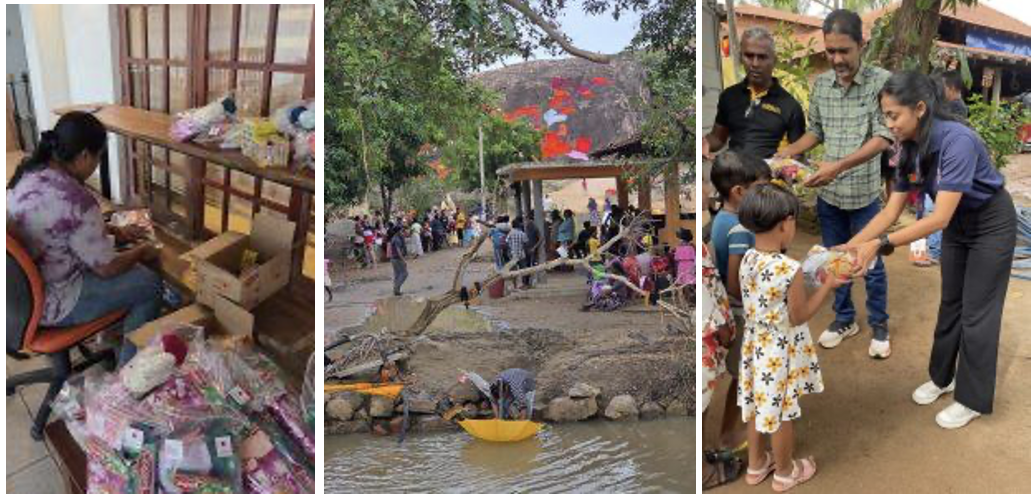
To address urgent needs in Neelabemma, A-PAD Sri Lanka prioritized targeted relief distribution. With the support of the Capital Maharaja Group (CMG) through its Sahana Yatra Initiative, and in coordination with local authorities, A-PAD Sri Lanka distributed 500 emergency food packs for children, 250 female hygiene kits, 250 male hygiene kits, and 150 baby hygiene kits. All items were prepared in line with National Disaster Relief Services Centre (NDRSC) standards to ensure quality, relevance, and dignity.
Despite access constraints, relief items were transported to the community and distributed from the Veherabendigala Rajamaha Viharasthaanaya, following careful coordination to ensure an orderly and respectful process. Community feedback highlighted the immediate value of the assistance during a period of limited access to clean water, sanitation, and income.
Looking Ahead
While floodwaters have receded, recovery in affected areas such as Mutur and Neelabemma remains ongoing. Temporary access routes are being restored, shelters rebuilt, and essential services gradually reinstated. However, sustained support is needed to address longer-term priorities, including safe housing, livelihood restoration, infrastructure rehabilitation, and strengthened disaster preparedness.
Through coordinated private sector engagement, partnerships with civil society and academia, and close collaboration with government and humanitarian actors, A-PAD Sri Lanka continues to play a critical role in supporting communities as they transition from emergency response toward recovery and resilience.
Take Action
- What businesses can do: Businesses of all sizes can play a vital role in preparing for, responding to, and recovering from crises. Whether by supporting logistics, providing essential goods and services, offering technical expertise, or working directly with communities, the private sector contributes to saving lives and strengthening resilience. The Briefing Note for the Private Sector: Humanitarian Priorities Plan – Cyclone Ditwah provides practical guidance to help companies understand priority needs, identify appropriate entry points for engagement, and ensure contributions complement government-led and humanitarian response efforts.
- How to support: A-PAD Sri Lanka has activated its emergency response for Cyclone Ditwah and is coordinating with government, humanitarian agencies, and private sector partners to deliver rescue and relief assistance. Businesses and individuals wishing to support the response can coordinate contributions by contacting A-PAD Sri Lanka or Mr. Hashim Firzan at hush@apad.lk, and refer to the A-PAD Sri Lanka Cyclone Ditwah response page for donation details
News & Tools
Media gallery
Official CBI local sources to keep you up to date
aa