Weathering the storm: How business continuity planning makes Fiji more resilient

The production facility of Bhikha Bhai’s Indian sweets, savouries and snacks stands in a low-lying riverside area of the Fijian town of Ba, making it one of the first places affected during floods. Over the years, the company’s 120 staff have learned to monitor river levels and note changing weather patterns, keeping only essential machinery on the production floor while storing other equipment out of harm’s way.
At the end of January 2024, the team was tracking rainfall and weather forecasts, noting when the river would be at high tide. With heavy rainfall expected, some staff were placed on standby overnight in case it became be necessary to activate the business continuity plan.
At 6 a.m., the river breached its banks. The team decided it was time to move their heaviest machinery, a 300 kg dough mixer, to safety.
In the past, moving the mixer was a back-breaking operation requiring up to eight people, causing significant down time and production delays. As the kitchen production team is entirely female, the heavy lifting was all the more challenging. To address this, the facility had been finally upgraded the previous year with a forklift access door, making removing heavy machinery much easier and more efficient.
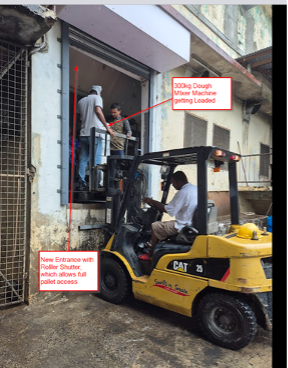
The Bhikha Bhai team activated their business continuity plan during the floods to safeguard equipment and minimize the impact of the crisis on production. Photo: Bhikha Bhai
With the cleaning team on standby, everyone was ready to jump into action as soon as the floodwaters receded, ensuring the mud was cleared before it could solidify. Using the facility’s 10,000-litre backup water tank, water pumps, and a 70KV generator, they cleaned the facility and restarted production, minimizing the disruption caused by the flooding.
Bhikha Bhai is one of the companies that participated in the business continuity plan training sessions delivered by the Fiji Business Disaster Resilience Council (FBDRC), a CBI Member Network. These workshops reached over 100 individuals from businesses across the country, helping them develop robust plans to maintain operations during and after disasters.
When the floods hit, the value of this training became clear. Equipped with their business continuity plans, many companies were able to respond swiftly, minimize losses, and continue serving their communities. They adapted by setting up alternative communication channels and activating remote work arrangements, demonstrating remarkable resilience.
Bikha Bhai’s experience is a powerful testimony to the effectiveness of this process. By successfully applying its business continuity strategies during the recent flooding, the company ensured its operations could continue, demonstrating the value of the FBDRC training programme in strengthening business resilience across Fiji.
Disasters such as hurricanes, floods and torrential rain can be devastating, destroying everything in their path and leaving businesses and communities in distress. To foster resilience, the FBDRC complemented its business continuity planning workshops with an awareness campaign targeting schools.
Raising disaster awareness among young people through a school campaign
While school-based disaster awareness initiatives may seem modest, they make a significant difference to both students and teachers. As part of a campaign funded by CBI, colourful A2-size wall calendars featuring cyclone tracking maps and essential disaster information were distributed to classrooms across Fiji, including remote areas like the island of Rotuma.
Engaging posters with crucial messages on flood and cyclone preparedness were also delivered to schools, serving as daily reminders to build a culture of disaster awareness among students and their communities. When the calendars were distributed at Suva Grammar School and the Marist Brothers High School, principals expressed keen interest and appreciation for the resources.
Another aspect of the disaster awareness strategy was a compelling 30-second video on cyclone preparedness aired on Fiji TV during peak cyclone season. The video reached a wide audience, reminding communities of the importance of preparedness and encouraging businesses to prioritize disaster resilience.
This initiative reflects how investing in disaster resilience does more than just prepare businesses—it also contributes to the broader resilience of the Fijian economy.
