Turning the Tide: 20 Years of Tsunami Readiness and Resilience

Earlier this month, I represented the OCHA/UNDP Connecting Business initiative at the Symposium hosted by the Asia Pacific Alliance for Disaster Management Sri Lanka. It was both a homecoming – I grew up in Colombo, and bumped into one of my favourite university professors at the event – and a foray into new experiences such as the student art exhibit and learning about social bonds.
The A-PAD SL Symposium: Key moments & messages
This year, the A-PAD Sri Lanka Symposium focused on it being 20 years since the devastating tsunami of 2014 which claimed over 227,000 lives across South and Southeast Asia, including 35,000 in Sri Lanka alone. Two-thirds of Sri Lanka’s 1,600km coastline was severely affected, leading to widespread destruction, chaos, and an estimated loss of over USD $1 billion in assets.
With no prior experience of such a catastrophe, Sri Lanka was unprepared for the scale of the disaster.
In the years since, the Government of Sri Lanka, along with national and international partners, have invested significantly in initiatives to bolster disaster preparedness.
These efforts include raising public awareness and strengthening early warning systems. However, continued efforts and ongoing dialogue are essential to ensure the necessary capacity for future preparedness and response, particularly given that 33% of the country’s population, along with 70% of hotels and 62% of industrial units, are located along the vulnerable coastline.
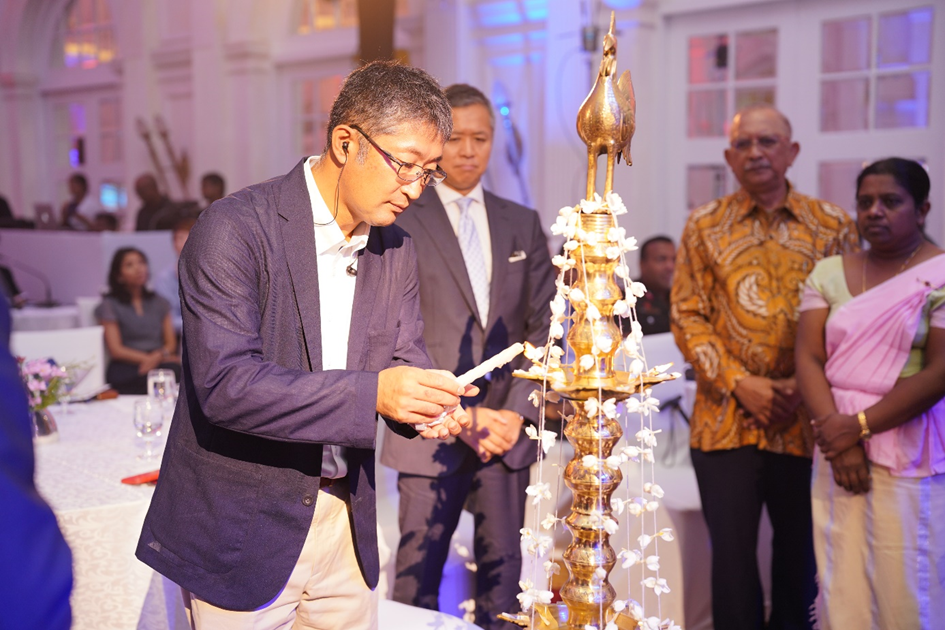
As per Sri Lankan custom, the symposium opened with an oil lighting ceremony which symbolizes prosperity and is a form of “marking beginnings”. Photo: A-PAD SL
The symposium goals were to foster dialogue on tsunami preparedness, reflect on lessons learned, and reinforce the path forward.
Drawing on global best practices and featuring local and international experts from Sri Lanka, Japan, and Indonesia, conversations emphasized the importance of enhancing public-private partnerships in building tsunami resilience and underscored the value of strong regional collaboration.
Personally, I found it fascinating to hear about social bonds. Mr. Yamada Tetsuya, Chief Representative of the Sri Lanka Office for the Japan International Cooperation Agency (JICA), spoke of the investments being developed in Japan where they try to calculate a return on investment (or “ROI”) on disaster management efforts to encourage individuals and companies to put money into this area ahead of time. It seems like an incredible concept for governments to develop financial bonds linked to the development sector and have an ROI on them.
Looking ahead
Beyond the innovative approach reflected by the social bonds concept, what stood out to me was the artwork on display, done by international relations students. As someone who is terrible at drawing, I am always impressed when anyone can make art without having been trained to do so. The exhibit also reflects A-PAD Sri Lanka’s commitment to connect the dots across sectors and engaging with cultural experiences to further raise awareness on the importance of disaster preparedness for greater resilience.
One comment Hush, Chief Operating Officer of A-PAD Sri Lanka, made, really resonated. He said, “Strategy [in disaster management] is important, but execution is everything.”
This reflects the very raison d’être of CBI, the reason why we strive to develop standard operating procedures on private sector engagement in disaster management as well as send focal points to be a part of emergency response efforts. We want to enable long-term partnerships for resilience and ensure that such alignments lead to a greater capacity to save lives and livelihoods on the ground – whether in the case of a tsunami or any other crisis.
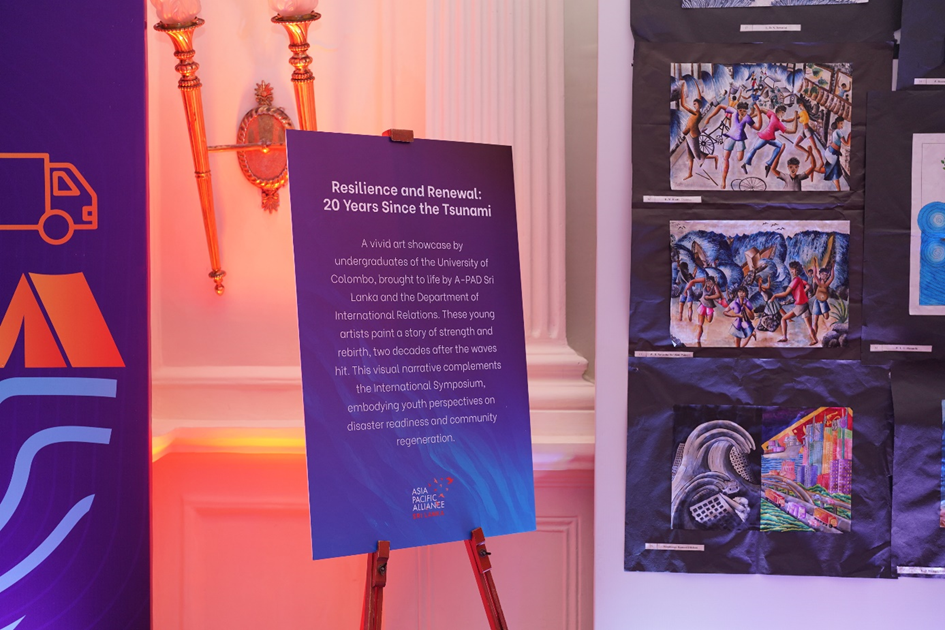
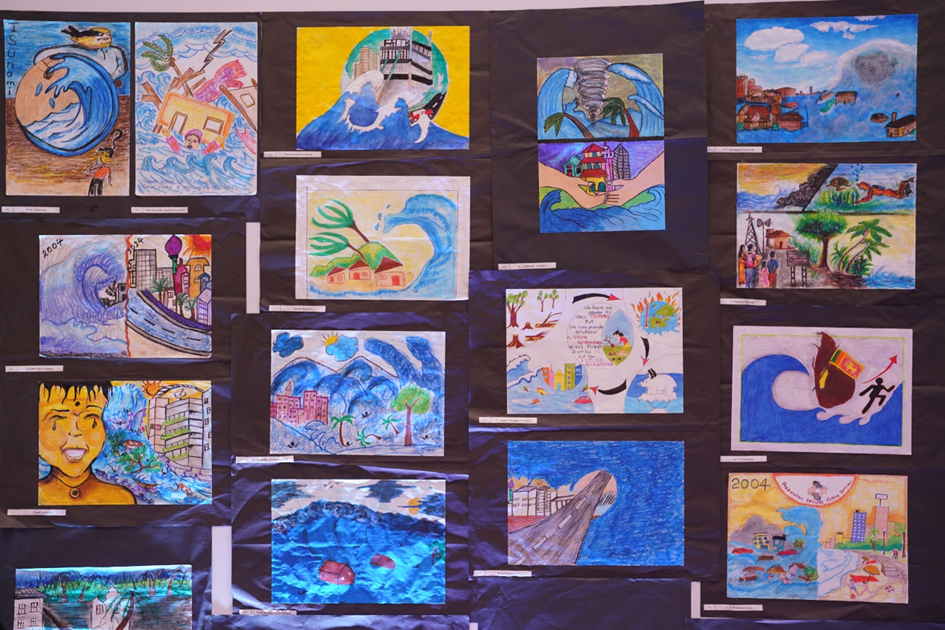
The A-PAD SL Symposium included an exhibit of art created by Sri Lankan students on the theme “Resilience & Renewal: 20 years since the Tsunami”. Photo: A-PAD SL